
Being a teen can feel like living with a full-volume speaker inside your head. Some days are smooth. Other days feel heavy, angry, or confusing for no apparent reason. If you have ever thought, why am I feeling this way again, you are not alone. One simple tool that can help is a teen mood tracker. It gives you a clear way to notice patterns, understand triggers, and see progress over time.
Many therapy programs also use mood tracking to support real change. That is why sites like Nova Mind Wellness often share tools that help teens and families build emotional awareness without making it complicated.
This blog is a practical guide to using a 30-day therapy progress worksheet. It is a daily tool you can use with therapy or on your own to learn your patterns.
1) Why a Teen Mood Tracker Matters for Mental Health
Here’s the thing. Many teens do not struggle because they feel emotions. They struggle because emotions feel confusing and unpredictable. When you cannot name what you think, it is harder to handle it.
A teen mood tracker helps because it builds a skill called emotional awareness. That means you start noticing your emotions in real time, not days later. That awareness can effectively support mental health.
Why mood tracking is essential for teens
A teen mood tracker can help you:
- name emotions more clearly, like sad, stressed, or overwhelmed
- Notice what happens before a mood shift
- See what enables you to calm down faster
- feel less “stuck” because you can see change over time
- feel more in control of your choices and reactions
Mood tracking can also help when you are in therapy. It gives you real examples to talk about, instead of trying to remember everything during a session.

2) What a 30-Day Therapy Progress Worksheet Is
A 30-day therapy progress worksheet is a simple daily tracker you fill out over the course of 1 month. It helps you record mood, habits, triggers, and coping tools. Over 30 days, you start to see patterns.
It is not about being perfect. It is about collecting clues.
What a teen mood tracker worksheet usually includes
Most teen mood tracker worksheets include:
- a daily mood rating
- a few emotion words
- sleep and energy check
- stress level check
- notes about triggers
- coping tools used
- one short reflection prompt
This is enough to build a clear picture without making the worksheet feel like homework.
3) How a Teen Mood Tracker Supports Therapy Progress
Therapy works best when you can track what is changing. A teen mood tracker helps you see progress in small steps, even when it feels slow.
How mood tracking supports therapy outcomes
A 30-day therapy progress worksheet can help you and your therapist:
- spot repeating triggers, like conflict, school stress, or social pressure
- notice body signs before a mood drop, like tension or headaches
- track which coping skills actually help, like breathing or walking
- See if sleep or screen time affects mood patterns
- measure progress, even when it does not feel obvious
What this really means is simple. Mood tracking turns feelings into information. And information is easier to work with than confusion.
4) What to Track Each Day in a Teen Mood Tracker
A good teen mood tracker focuses on a few valuable points. It does not try to track everything.
A simple daily list that works
Here are the most helpful daily items in a teen mood tracker:
- Mood rating (1 to 10)
- Top emotions (pick 1 to 3 words)
- Energy (low, medium, high)
- Sleep (hours + quality)
- Stress level (1 to 5)
- Trigger check (what set the mood off, if anything)
- Coping skill used (what you did to handle it)
- One win (one small thing you did right)
This keeps tracking short, but is still meaningful.
Simple scales help the most.
You do not need complex charts. Use scales like:
- Mood: 1 to 10
- Stress: 1 to 5
- Sleep quality: poor, okay, good
- Energy: low, medium, high
Scales make patterns clear. They also make it easier to fill in the worksheet daily.

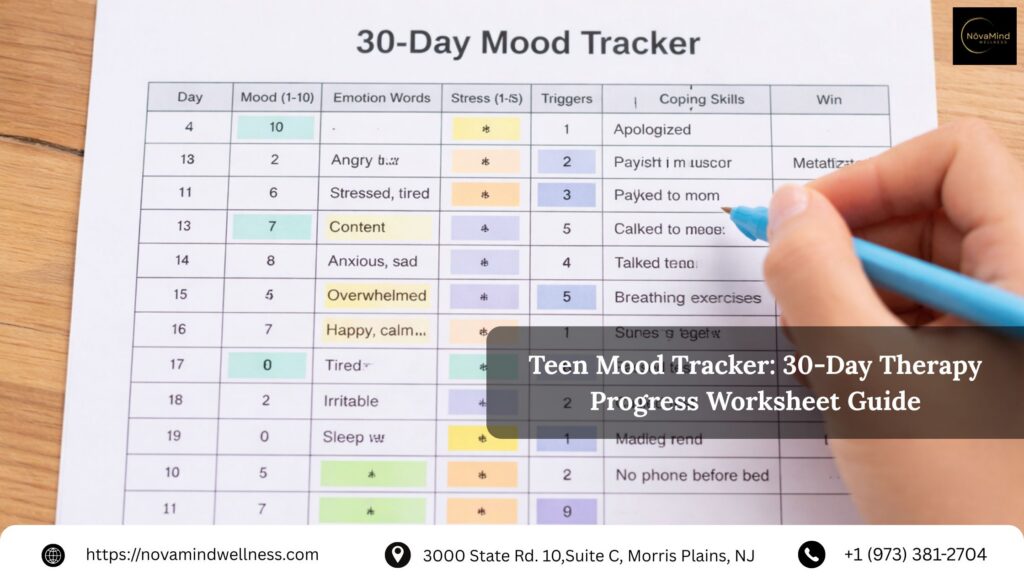
5) Sample 30-Day Teen Mood Tracker Worksheet Layout
Here is a sample layout you can copy into a notebook or digital document. This shows what a 30-day therapy progress worksheet can look like.
| Daily Track | Quick Entry Example |
| Mood (1–10) | 6 |
| Emotions (1–3 words) | anxious, tired |
| Sleep (hours + quality) | 7 hours, okay |
| Stress (1–5) | 4 |
| Trigger | math test, argument |
| Coping tool used | short walk, music |
| One win | asked for help |
This format works because it is fast. You can fill it in two minutes. That makes consistency easier.
6) Benefits for Teens, Parents, and Therapists
A teen mood tracker is not just for teens. It can help parents and therapists, too, especially when communication is hard.
Benefits for teens
A teen mood tracker can help you:
- feel less confused about mood changes
- notice early warning signs before things get intense
- build confidence in coping skills
- See progress even when you feel stuck
- talk about feelings without needing perfect words
Benefits for parents
Parents often want to help but do not know how. A 30-day therapy progress worksheet can help parents:
- understand patterns without pushing for answers
- reduce arguments caused by guessing or assumptions
- Notice what situations increase stress
- support better routines like sleep and breaks
The worksheet can also lower pressure. Instead of forcing long talks, parents can focus on practical support.
Benefits for therapists
Therapists use patterns to guide treatment. A teen mood tracker helps a therapist:
- personalize treatment planning
- spot triggers and coping skills that work
- track therapy progress over time
- Focus sessions on what matters most
- Reduce the time spent trying to remember the week
This is one reason tools like Nova Mind Wellness sometimes encourage simple mood tracking as a therapy support habit.
7) Practical Tips to Use a Teen Mood Tracker Daily
Daily tracking can feel annoying at first. The trick is to make it easy and low-pressure.
Tips that improve consistency
- Pick one time each day, like after dinner or before bed.
- Keep the worksheet visible, not hidden in a drawer.
- Set a phone reminder with a simple label like “mood check.”
- Keep entries short. Two minutes is enough.
- If you miss a day, do not quit. Just continue the next day.
Simple journaling prompts for the worksheet
If your worksheet has a small journal space, use prompts like:
- What was the hardest moment today?
- What helped even a little?
- What do I need tomorrow?
- What made me feel calm or safe today?
- What is one thing I handled better than last week?
These prompts are simple, but they help you build self-reflection.
A helpful rule for teens
Be honest, not perfect. A teen mood tracker works best when you write what is true, even if it is messy.
8) Flexible Formats and Accessibility Options
Not everyone likes paper. Not everyone likes apps. The best option is the one you will actually use.
Standard formats for a teen mood tracker
- Printable PDF worksheet you can keep in a folder
- Digital version you fill out on your phone or laptop
- App-based tracking with reminders and graphs
- Notebook version with the same sections as the worksheet
Accessibility ideas for different needs
- Use larger text if reading is hard.
- Use symbols or colors instead of long writing.
- Use voice notes, then write a one-sentence summary.
- Keep the worksheet in a simple “check box” style.
The goal is not a fancy format. The goal is daily awareness and progress in therapy.
Help Your Teen Understand Their Emotions with the Right Support
A teen mood tracker can open the door to better self-awareness, healthier coping skills, and more meaningful therapy progress. Our compassionate therapists help teens and parents turn daily emotional patterns into real growth and confidence.
Start with a Free Parent ConsultationFAQs: Teen Mood Tracker and 30-Day Therapy Progress Worksheet
1) What is a teen mood tracker, and how does it help therapy progress?
A teen mood tracker is a daily tool that helps you record mood, stress, triggers, and coping skills. It supports therapy progress by showing patterns over time and allowing you to talk about real examples during sessions.
2) How do you use a 30-day therapy progress worksheet without feeling overwhelmed?
A 30-day therapy progress worksheet works best when it’s kept short. Use simple scales, pick 1 to 3 emotion words, and write one quick note about triggers or coping tools. Short, consistent entries help more than long ones.
3) What should a teen mood tracker include each day?
A helpful teen mood tracker includes a mood rating, emotion words, a sleep and energy check, stress level, triggers, the coping skill used, and a short reflection. These items support emotional awareness and therapy progress.
4) Can parents use a teen mood tracker to support mental health at home?
Yes, but it works best when the teen agrees. A teen mood tracker can help parents support mental health by noticing patterns and focusing on practical help, such as sleep routines and stress reduction, rather than pushing for long talks.
5) Do therapists like using a teen mood tracker in treatment?
Many do, because a teen mood tracker helps therapy progress feel more trackable. It gives the therapist clear patterns, helps identify triggers, and supports personalized treatment planning.
6) Is a digital teen mood tracker better than a printable PDF worksheet?
It depends on what you will use daily. A digital teen mood tracker can be easier with reminders, while a printable 30-day therapy progress worksheet can feel more personal and straightforward. The best choice is the one that feels easy to keep up with.
Conclusion
A teen mood tracker is a small habit that can create immense clarity. It helps you notice patterns, understand triggers, and see your own progress. It also makes therapy sessions more focused because you are not trying to remember everything. You are bringing real examples.