
Medically Reviewed by: Akhtar Hossain, Physician – expert in helping people with serious mental illnesses, including but limited to Major depression, bipolar disorder, schizophrenia, anxiety, ADHD, autistic spectrum disorder, substance use disorders.
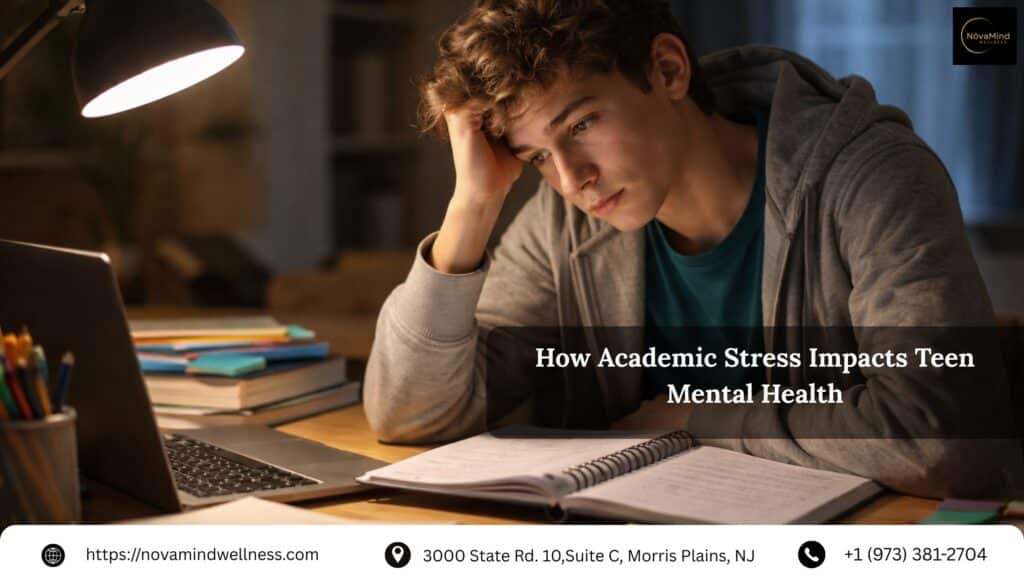
Academic success can create opportunities for teenagers, but excessive academic pressure can significantly impact emotional well-being. Parents throughout Morris Plains, Morristown, Parsippany, Randolph, Denville, and surrounding New Jersey communities are increasingly concerned about the effects of school stress, academic anxiety, and burnout on their children.
Academic pressure can contribute to anxiety, depression, emotional exhaustion, sleep disturbances, and declining self-esteem in teenagers.
Recognizing the warning signs early can help families provide support before academic stress develops into a more serious mental health concern.
If your teen is struggling, Nova Mind Wellness offers specialized support through its Teen Counseling & Psychiatry Program:
https://novamindwellness.com/treatment-services/teen-counseling-psychiatry/
and Teen Outpatient Mental Health Services:
https://novamindwellness.com/treatment-services/teen-outpatient-mental-health/
Can Academic Pressure Affect Teen Mental Health?
Yes.
Excessive academic pressure can negatively affect a teenager’s emotional, psychological, and physical health.
Academic stress may contribute to:
- Anxiety disorders
- Depression
- Panic attacks
- Sleep disturbances
- Emotional exhaustion
- Academic burnout
- Low self-esteem
- Social withdrawal
For some students, school-related stress becomes so overwhelming that it affects relationships, daily functioning, and overall quality of life.

Why Are More Teens Struggling With Academic Stress?
Today’s teenagers face increasing demands related to academics, college preparation, extracurricular activities, and social expectations.
Common sources of academic pressure include:
| Academic Stress Factor | Potential Impact |
|---|---|
| Pressure to earn high grades | Anxiety and perfectionism |
| College admissions competition | Chronic stress |
| Standardized testing | Test anxiety |
| Advanced coursework | Burnout |
| Social media comparisons | Low self-esteem |
| Extracurricular commitments | Overwhelm and exhaustion |
| Fear of disappointing parents | Emotional distress |
Many parents search questions such as:
- Why is my teenager constantly stressed about school?
- Can school stress cause anxiety?
- Is my teen experiencing academic burnout?
- How much academic pressure is too much?
- When should my teenager see a therapist?
Real-Life Use Cases: How Academic Pressure Shows Up in Teens
Use Case #1: The Straight-A Student Who Suddenly Stops Caring
A 16-year-old student consistently earns top grades but begins sleeping poorly, withdrawing from friends, and losing motivation.
What’s Happening?
This may indicate academic burnout rather than laziness.
Potential Risk
Without support, burnout may contribute to anxiety, depression, and emotional exhaustion.
Use Case #2: The Teen Who Has Panic Attacks Before Exams
A student experiences racing thoughts, sweating, nausea, and difficulty breathing before major tests.
What’s Happening?
This may be a sign of test anxiety or school-related anxiety.
Potential Risk
Anxiety symptoms can become more severe if left untreated.
Use Case #3: The Student Who Refuses to Go to School
A teenager frequently complains of headaches or stomach aches before school.
What’s Happening?
Physical symptoms are often one of the earliest signs of stress and anxiety.
Potential Risk
School avoidance behaviors can worsen over time.

How to Detect Academic Stress in Teenagers
Many parents overlook the early warning signs because symptoms often develop gradually.
Emotional Signs
- Increased irritability
- Mood swings
- Frequent frustration
- Feeling overwhelmed
- Emotional outbursts
- Persistent worry
Mental Health Signs
- Fear of failure
- Perfectionism
- Difficulty concentrating
- Negative self-talk
- Low confidence
- Constant anxiety about grades
Physical Symptoms
- Headaches
- Stomach aches
- Fatigue
- Sleep disturbances
- Appetite changes
- Muscle tension
Behavioral Signs
- Isolation from family and friends
- Avoiding schoolwork
- Excessive studying
- Declining academic performance
- Loss of interest in hobbies
- Increased procrastination
Important
If several of these symptoms continue for multiple weeks, professional evaluation may be beneficial.
Parents can learn more about common adolescent mental health concerns here:
Academic Stress vs. Academic Burnout
| Academic Stress | Academic Burnout |
|---|---|
| Temporary pressure | Long-term exhaustion |
| Motivation remains present | Motivation disappears |
| Improves after rest | Persists despite rest |
| Short-term worry | Chronic overwhelm |
| Manageable challenge | Emotional depletion |
Clinical Perspective
Burnout is not simply being tired.
Mental health professionals view burnout as emotional, physical, and psychological exhaustion caused by prolonged stress.
Timeline: How Academic Pressure Can Escalate
| Timeline | Common Symptoms |
|---|---|
| Week 1–2 | Worry, irritability, difficulty relaxing |
| Week 3–6 | Sleep problems, headaches, increased anxiety |
| Month 2–3 | Emotional exhaustion, loss of motivation |
| Month 3–6 | Burnout symptoms, withdrawal, declining performance |
| Long-Term | Anxiety disorders, depression, chronic stress |
Can Academic Pressure Lead to Anxiety or Depression?
Yes.
While academic pressure alone does not automatically cause a mental health disorder, chronic school stress can significantly increase risk.
Potential consequences include:
- Generalized anxiety
- Social anxiety
- Panic symptoms
- Depression
- Sleep disorders
- Reduced self-esteem
- Emotional withdrawal
Many teens begin believing their value depends entirely on grades or achievement.
This mindset can have a serious impact on mental health.
Help Your Teen Manage Academic Stress with Confidence
Academic pressure can quietly affect your teen’s mental health, motivation, and self-esteem. With the right support, teens can learn healthier ways to cope with school stress while continuing their daily routines. At Nova Mind Wellness, we provide compassionate, outpatient mental health care designed to support teens and families every step of the way.
Get Support for Your Teen TodayReal Questions Parents Ask in Morris Plains and Nearby Communities
Q My teen cries before every test. Is that normal?
Occasional nervousness is normal. Frequent emotional distress before exams may indicate test anxiety.
Q My child studies constantly but still feels like they’re failing.
This often reflects perfectionism, unrealistic expectations, or chronic stress.
Q My teenager gets good grades but seems miserable.
Academic success does not always equal emotional wellness.
Many struggling teens continue performing well while experiencing significant anxiety.
Q Should I worry if my teen is always overwhelmed?
Persistent overwhelm may indicate unhealthy stress levels that require attention.
Risk Factors That Increase Academic Stress
Some teens may be more vulnerable to school-related stress.
Common risk factors include:
- Perfectionism
- Existing anxiety symptoms
- Learning challenges
- Family expectations
- Competitive school environments
- Social comparison
- Limited coping skills

How Parents Can Help a Teen Struggling With School Stress
Encourage Open Communication
Create opportunities for honest conversations without judgment.
Focus on Growth Rather Than Perfection
Praise effort, persistence, and resilience.
Prioritize Sleep
Teenagers typically require 8–10 hours of sleep each night.
Create Healthy Balance
Friendships, hobbies, exercise, and downtime support emotional well-being.
Seek Professional Support Early
Early intervention can help prevent symptoms from becoming more severe.
When Should Parents Seek Professional Help?
Consider seeking professional support if your teenager experiences:
✔ Persistent anxiety
✔ Panic attacks
✔ School refusal
✔ Significant mood changes
✔ Depression symptoms
✔ Chronic sleep problems
✔ Emotional withdrawal
✔ Self-esteem concerns
✔ Academic burnout
Professional counseling and psychiatric support can help teens build healthier coping skills and emotional resilience.
Learn more:
Teen Counseling & Psychiatry:
https://novamindwellness.com/treatment-services/teen-counseling-psychiatry/
Teen Outpatient Mental Health:
https://novamindwellness.com/treatment-services/teen-outpatient-mental-health/
Verify Your Insurance Coverage
Many families are surprised to learn that mental health treatment may be covered by insurance.
Verify your benefits online:
Frequently Asked Questions
Q Can school stress cause anxiety in teenagers?
Yes. Ongoing academic pressure can contribute to anxiety, excessive worry, and emotional distress.
Q What are the warning signs of academic burnout?
Exhaustion, loss of motivation, irritability, sleep disturbances, and declining academic performance are common warning signs.
Q How do I know if my teen needs counseling?
If stress affects daily functioning, relationships, mood, sleep, or school performance, professional support may be beneficial.
Q Can academic pressure cause depression?
Long-term unmanaged stress can increase the risk of depression and other mental health concerns.
Q Is it normal for teenagers to feel stressed about grades?
Some stress is normal. Persistent anxiety, panic attacks, emotional distress, or burnout are not.
Get Help for Academic Stress and Teen Mental Health
Academic achievement should never come at the expense of emotional well-being.
If your teenager is struggling with anxiety, academic burnout, overwhelming school stress, or other mental health challenges, support is available.
Nova Mind Wellness
📍 3000 State Rd. 10, Suite C, Morris Plains, NJ
📞 (973) 828-8075
Insurance Verification:
https://novamindwellness.com/verify-insurance/
Teen Counseling & Psychiatry:
https://novamindwellness.com/treatment-services/teen-counseling-psychiatry/
Teen Outpatient Mental Health:
https://novamindwellness.com/treatment-services/teen-outpatient-mental-health/
Mental Health Conditions:
https://novamindwellness.com/conditions/
Our team proudly serves teens and families throughout Morris Plains, Morristown, Parsippany, Randolph, Denville, and surrounding New Jersey communities.