

Medically Reviewed by: Akhtar Hossain, Physician – expert in helping people with serious mental illnesses, including but limited to Major depression, bipolar disorder, schizophrenia, anxiety, ADHD, autistic spectrum disorder, substance use disorders.
Watching your teenager struggle with depression can leave you feeling overwhelmed, confused, and unsure of what to do next. You may wonder whether therapy is enough, if medication is necessary, how long recovery takes, or even whether you’ve somehow contributed to what your child is experiencing.
If you’ve searched questions like “What questions should I ask when looking for a teen therapist?”, “Why is my teenager so depressed and anxious all the time?”, or “How do I help my teen with depression?”, you’re not alone. These are among the most common concerns parents have when trying to find the right support for their child.
The encouraging news is that teen depression is highly treatable. With early intervention, evidence-based care, family involvement, and the right treatment plan, many adolescents experience meaningful improvements in mood, relationships, confidence, and overall quality of life.
At Nova Mind Wellness, we help families throughout Morris Plains, Morristown, Parsippany, Randolph, Denville, Mountain Lakes, and nearby New Jersey communities navigate adolescent depression with compassionate, personalized care. Whether your teen is experiencing persistent sadness, anxiety, emotional withdrawal, or difficulty functioning at school or home, finding the right support early can make a significant difference.
Explore the mental health conditions we treat: Treatments
Quick Answer: How Can Parents Help a Teen With Depression?
The most effective way to help a teenager with depression is to seek a professional mental health evaluation, choose evidence-based treatment that fits your teen’s needs, maintain open and supportive communication at home, and stay actively involved throughout the recovery process.
Every teenager’s experience with depression is different. Some improve with weekly outpatient therapy, while others benefit from psychiatric support, family therapy, or more structured mental health services. The key is early intervention, not waiting for symptoms to become severe.
Why Is My Teenager So Depressed and Anxious All the Time?
One of the first questions many parents ask is:
“My teenager used to be happy. Why are they suddenly depressed and anxious all the time?”
Depression rarely has one single cause. Instead, it often develops through a combination of biological, psychological, environmental, and social factors.
Common Factors That Can Contribute to Teen Depression
| Contributing Factor | How It May Affect Teens |
|---|---|
| Genetics or family history | May increase vulnerability to depression or anxiety |
| Brain chemistry | Changes in neurotransmitter function can affect mood regulation |
| Academic pressure | Chronic stress, perfectionism, and burnout |
| Social media and comparison | Lower self-esteem and feelings of isolation |
| Bullying or peer conflict | Increased emotional distress and withdrawal |
| Family changes | Divorce, conflict, grief, or major life transitions |
| Trauma or adverse experiences | Can significantly affect emotional development |
| Co-occurring anxiety | Anxiety and depression frequently occur together |
Many parents assume depression begins after a major life event, but that’s not always the case. Some teens develop symptoms gradually, while others experience changes that seem sudden.
Understanding the possible causes helps parents focus less on blame and more on getting appropriate support.
Is My Teen’s Depression My Fault?
This is one of the most emotionally difficult questions parents ask.
The honest answer is:
In most cases, no.
Parents naturally look for reasons when a child is struggling, and many wonder if they missed warning signs or made mistakes along the way. While family relationships can influence emotional well-being, depression is a complex medical condition influenced by many interacting factors.
Blaming yourself rarely helps your child recover.
Instead, mental health professionals encourage parents to focus on the questions that matter most today:
- What support does my teen need now?
- What treatment options are available?
- How can our family become part of the recovery process?
- What changes can we make at home to support healing?
One of the strongest protective factors for teenagers with depression is having supportive caregivers who remain engaged throughout treatment.
Your involvement moving forward often has a greater impact than trying to determine why depression developed in the first place.
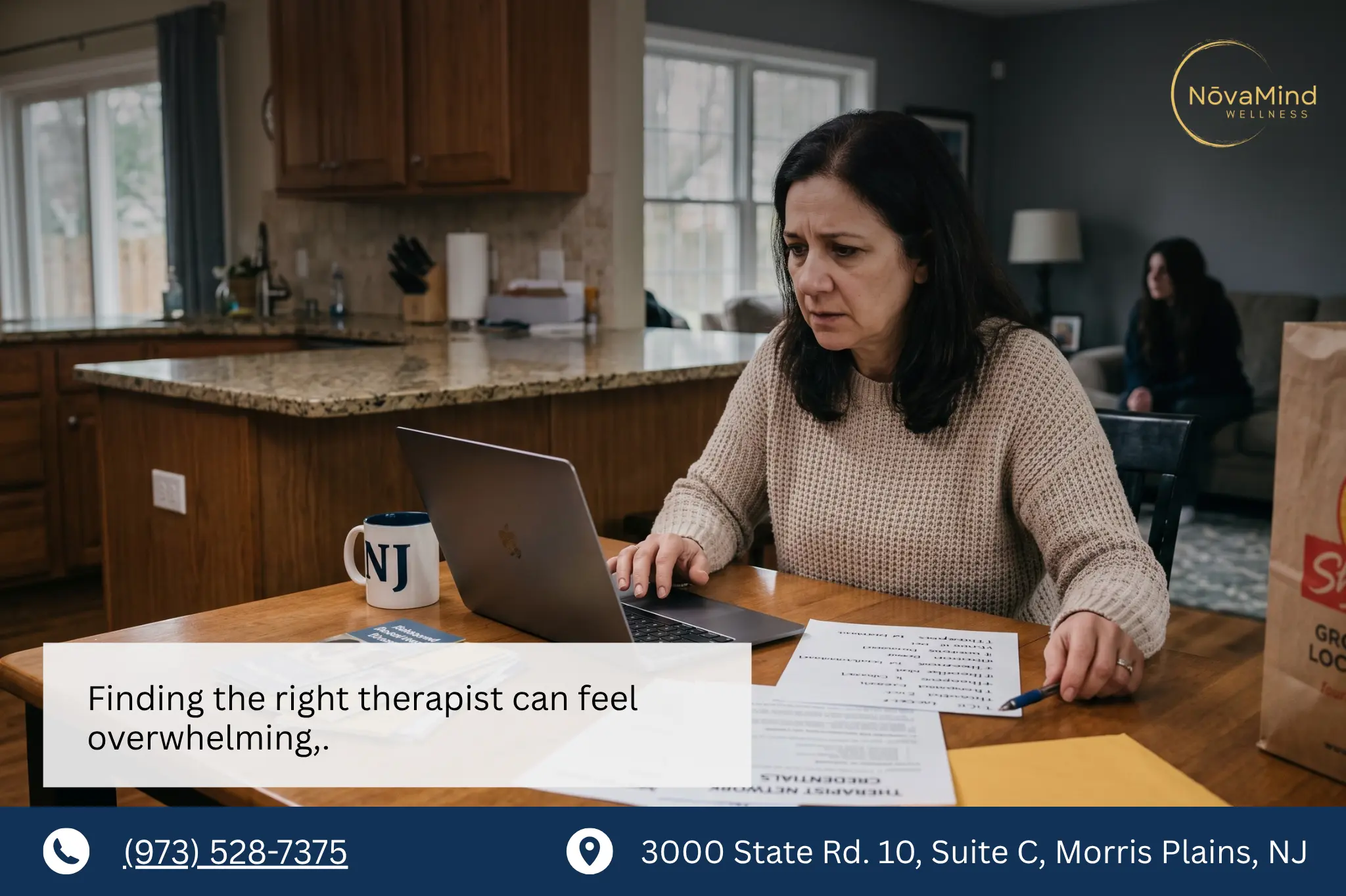
How Do I Choose the Right Teen Therapist?
Finding the right therapist can feel overwhelming, especially if this is your family’s first experience with mental health care.
Not every therapist specializes in adolescent depression, and finding someone who understands teenage development, family dynamics, and evidence-based treatment approaches is important.
Parents frequently search:
- What questions should I ask when looking for a teen therapist?
- How do I know if a therapist is right for my child?
- Should my teen see a psychologist, counselor, psychiatrist, or therapist?
The best provider depends on your teenager’s individual needs, but choosing a clinician with experience treating adolescents is often one of the most important decisions you’ll make.
At Nova Mind Wellness, our Teen Counseling & Psychiatry services are designed specifically for adolescents experiencing depression, anxiety, emotional challenges, and related mental health concerns.
Learn more about our Teen Counseling & Psychiatry services.
What Questions Should I Ask When Looking for a Teen Therapist?
Parents often focus on convenience or insurance, but it’s equally important to understand how a therapist approaches treatment.
Use this checklist during your initial consultation.
Questions Every Parent Should Ask
1. Do You Specialize in Treating Teen Depression?
Working with adolescents requires specialized training and experience. Teenagers often communicate differently than adults and benefit from age-appropriate therapeutic approaches.
2. What Types of Therapy Do You Use?
Ask whether treatment may include evidence-based approaches such as:
- Cognitive Behavioral Therapy (CBT)
- Dialectical Behavior Therapy (DBT)
- Family Therapy
- Individual Therapy
- Psychiatric Evaluation when appropriate
Understanding the therapist’s treatment philosophy helps you determine whether it aligns with your child’s needs.
3. How Will Parents Be Involved?
Depression affects the entire family.
While teens need privacy during therapy, parents should understand how they can support treatment at home and when they will receive updates regarding progress or safety concerns.
4. How Do You Measure Progress?
Effective treatment should include regular evaluation of:
- Mood changes
- Emotional regulation
- School functioning
- Relationships
- Coping skills
- Treatment goals
Recovery is not measured by a single “good day.” Instead, therapists look for gradual, sustainable improvements over time.
5. What Happens If My Teen Doesn’t Want to Participate?
Resistance is common during adolescence.
Ask how the therapist helps reluctant teens build trust and engage in treatment without creating unnecessary conflict at home.
6. When Would You Recommend Psychiatric Services?
Some teenagers benefit from therapy alone, while others may require psychiatric evaluation if symptoms remain severe or significantly interfere with daily functioning.
Understanding when medication might be considered can help families make informed decisions later if needed.
Red Flags to Watch for When Choosing a Provider
Choosing a therapist is an important decision. Consider asking additional questions or seeking another opinion if you notice:
- No experience treating adolescents
- No clear treatment plan
- Little communication about goals or progress
- Promises of quick or guaranteed results
- Pressure to make immediate treatment decisions without a thorough evaluation
Evidence-based mental health care is collaborative, individualized, and based on a comprehensive clinical assessment.
Parents ask in daily life: “I Don’t Know If This Therapist Is Helping”
A mother from Morris County noticed her 15-year-old daughter continued attending therapy but wasn’t opening up much at home.
She wondered if treatment was actually working.
After discussing her concerns with the therapist, she learned that progress was happening in smaller ways:
- Her daughter had started identifying emotions more accurately.
- She was attending school more consistently.
- Panic attacks had become less frequent.
- She had begun reconnecting with one close friend.
This is an important reminder for families:
Progress in teen depression is often gradual rather than dramatic.
Some of the earliest improvements happen internally before parents notice visible behavioral changes.
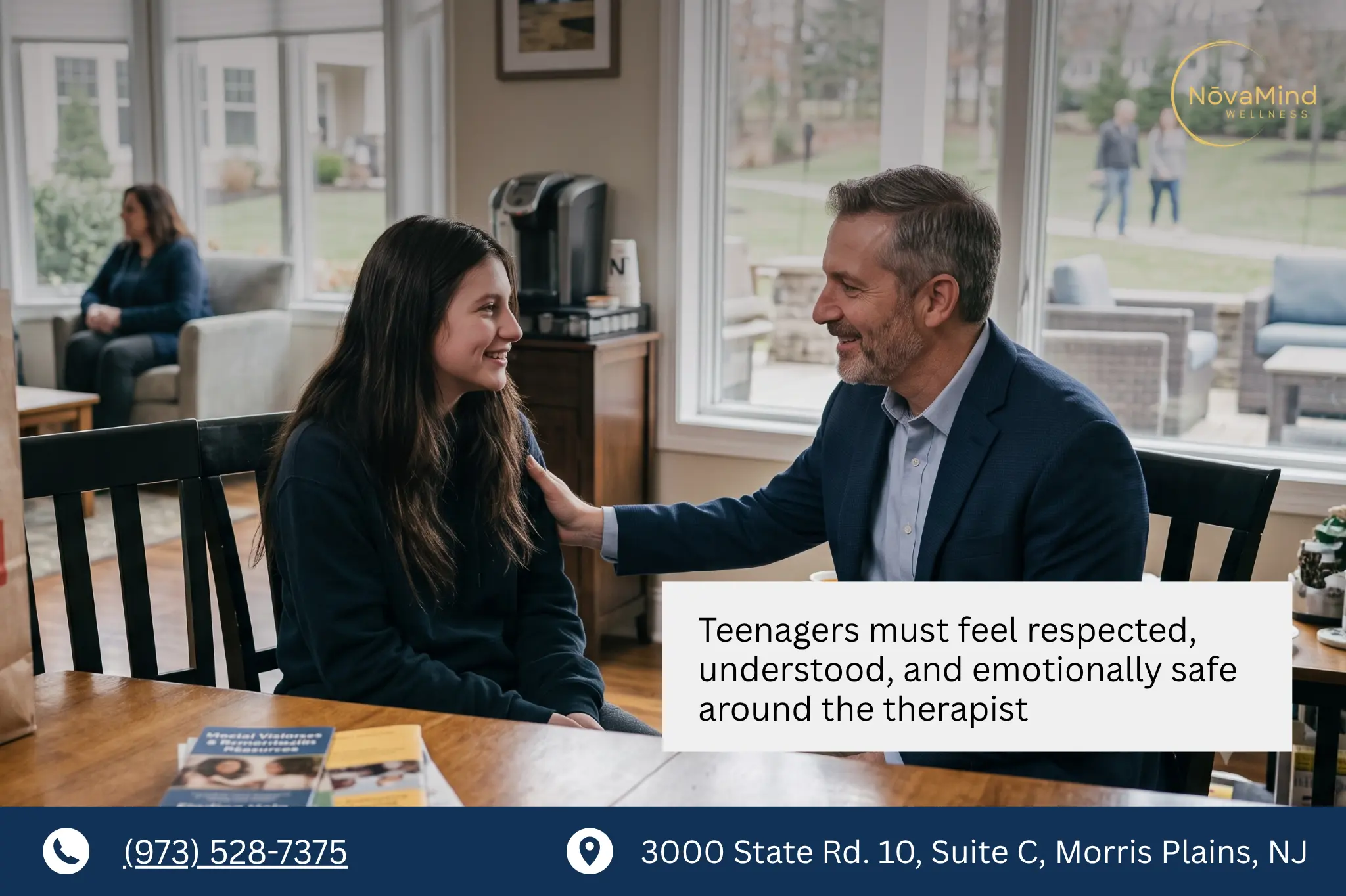
Why Choosing the Right Therapist Matters
Research consistently shows that one of the strongest predictors of successful therapy is the quality of the therapeutic relationship.
When teenagers feel respected, understood, and emotionally safe, they are generally more willing to participate in treatment, practice coping skills, and remain engaged over time.
Choosing a provider who specializes in adolescent mental health can help create that foundation for recovery.
In the next section, we’ll answer another question nearly every parent asks:
How long does teen depression treatment take, what are the signs that depression is getting worse, and when should parents consider medication as part of treatment?
How Long Does It Take to See Improvement From Teen Depression Treatment?
One of the biggest concerns parents have after starting therapy is:
“How long until my teenager starts feeling better?”
The answer depends on several factors, including the severity of depression, how long symptoms have been present, the type of treatment being used, family support, and whether other conditions such as anxiety or ADHD are also involved.
There is no universal timeline for recovery, but most teens begin showing small, meaningful improvements before complete symptom relief.
Parents often expect dramatic changes after one or two therapy sessions. In reality, recovery usually happens through a series of small wins.
For example, your teen may begin:
- Sleeping better.
- Talking more openly.
- Showing interest in favorite activities again.
- Returning to school consistently.
- Spending time with friends.
- Managing emotions with fewer outbursts.
These changes often indicate that treatment is moving in the right direction, even if your teenager still experiences difficult days.
Teen Depression Recovery Timeline
| Time After Starting Treatment | What Parents May Notice |
|---|---|
| First 2–4 Weeks | Building trust with the therapist, attending sessions consistently, slight improvements in communication |
| 1–3 Months | Better coping skills, fewer emotional outbursts, improved sleep, increased motivation |
| 3–6 Months | More stable mood, healthier relationships, improved school participation, stronger emotional regulation |
| 6–12 Months | Continued recovery, relapse prevention strategies, increased confidence and independence |
Recovery is rarely linear.
Many teens experience periods of progress followed by temporary setbacks. This does not necessarily mean treatment isn’t working—it often reflects the natural recovery process.
True Incident: “My Son Says Therapy Isn’t Helping”
A father from Parsippany shared that after four therapy sessions, his 16-year-old son insisted therapy was “a waste of time.”
Instead of stopping treatment immediately, the family discussed these concerns with the therapist.
Together they discovered:
- His son felt uncomfortable expressing emotions.
- He expected therapy to “fix” depression quickly.
- He hadn’t yet developed trust with the therapist.
Over the following months, therapy became more productive, and his mood gradually improved.
One of the biggest reasons families stop treatment too early is expecting immediate results.
Like physical rehabilitation after an injury, emotional healing takes time.
What Are Signs My Teen’s Depression Is Getting Worse?
Parents often ask:
“How do I know if my teenager is getting better—or if things are becoming more serious?”
Recognizing worsening symptoms early allows families to seek additional support before a crisis develops.
Emotional Warning Signs
- Persistent hopelessness
- Increased sadness
- Frequent crying
- Loss of interest in previously enjoyable activities
- Feeling worthless or guilty most days
Behavioral Warning Signs
- Withdrawing from family and friends
- Refusing school
- Spending nearly all day isolated in their room
- Significant decline in academic performance
- Increased irritability or anger
Physical Warning Signs
- Sleeping far more or far less than usual
- Major changes in appetite
- Low energy nearly every day
- Frequent unexplained headaches or stomachaches
High-Risk Warning Signs
Parents should seek immediate professional evaluation if a teenager:
- Talks about feeling hopeless.
- Mentions death or suicide.
- Begins giving away personal belongings.
- Engages in self-harm.
- Shows dramatic personality changes.
- Says others would be “better off without them.”
These warning signs should never be ignored.
Early intervention can significantly improve outcomes.
Progress vs. Worsening Depression
| Signs of Progress | Signs Symptoms May Be Worsening |
|---|---|
| Better communication | Increased isolation |
| Returning to hobbies | Loss of interest in everything |
| Improved sleep | Ongoing sleep disruption |
| More emotional stability | Frequent emotional breakdowns |
| Better school attendance | School refusal |
| Increased motivation | Persistent hopelessness |
Monitoring these patterns over several weeks is often more helpful than focusing on isolated good or bad days.
Should I Put My Teen on Medication for Depression?
This is one of the most difficult treatment decisions parents face.
Many families worry that medication means their child is “too sick” or that antidepressants will change their teen’s personality.
The reality is more nuanced.
Medication is not the right choice for every teenager, but it can be an effective part of treatment for some adolescents when recommended by a qualified psychiatric provider.
Parents should never feel pressured to begin medication without a thorough evaluation and an opportunity to ask questions.
When Is Medication Sometimes Recommended?
A psychiatric provider may discuss medication when:
- Depression is moderate to severe.
- Symptoms significantly interfere with daily functioning.
- Therapy alone has not led to enough improvement.
- Depression occurs alongside severe anxiety.
- Safety concerns require more intensive intervention.
Medication decisions should always consider the teenager’s symptoms, medical history, family history, treatment goals, and ongoing monitoring.
Therapy vs. Medication
| Therapy | Medication |
|---|---|
| Helps teens develop lifelong coping skills | Helps reduce symptoms for some adolescents |
| Addresses thoughts, behaviors, and emotions | Targets biological aspects of depression |
| Often recommended as a first-line treatment | May be recommended alongside therapy depending on clinical needs |
| Builds resilience for long-term recovery | Requires ongoing monitoring by a qualified prescriber |
Many adolescents benefit from therapy alone, while others achieve the best outcomes through a combination of psychotherapy and medication.
Treatment should always be individualized rather than following a one-size-fits-all approach.
Is Medication Safe for Teenagers?
Parents frequently ask:
“Will antidepressants make my teenager dependent?”
Antidepressants are not considered addictive, but they should only be prescribed, monitored, and adjusted by qualified medical professionals.
Regular follow-up appointments help ensure:
- The medication remains appropriate.
- Side effects are monitored.
- Symptoms are improving.
- Treatment goals are being met.
Open communication between parents, teenagers, therapists, and psychiatric providers is an important part of safe, effective treatment.
Real-Life Parent Question: “I’m Afraid Medication Will Change My Child”
A mother from Morris Plains delayed seeking psychiatric care because she worried medication would change her son’s personality.
After meeting with a psychiatric provider, she learned that medication was only one possible treatment option—not an automatic recommendation.
Her son began with therapy, developed healthier coping skills, and continued to be monitored over time. Together, the family and treatment team regularly reviewed his progress before making any additional decisions.
The goal of treatment is never to change who your teenager is—it is to reduce the symptoms that are preventing them from living a healthy, fulfilling life.
Should Parents Feel Guilty for Considering Medication?
Many parents struggle with feelings such as:
- “Did I wait too long?”
- “Am I overreacting?”
- “Am I making the wrong decision?”
- “Will my child blame me?”
These concerns are understandable.
Seeking professional guidance is not a sign of failure—it is an act of caring for your child’s health.
The most important decision is not whether to choose therapy or medication first. It is ensuring your teenager receives a comprehensive evaluation so treatment recommendations are based on their individual needs rather than fear or uncertainty.
Evidence-Based Care Matters
Whether your teenager benefits from therapy, psychiatric support, or a combination of treatments, care should always be individualized and based on a thorough clinical assessment.
At Nova Mind Wellness, our team provides comprehensive adolescent mental health services, including therapy and psychiatric care designed specifically for teenagers.
Learn more about our Teen Counseling & Psychiatry services.
If your teen is appropriate for outpatient care, you can also explore our Teen Outpatient Mental Health Program.
In the final section, we’ll discuss how to talk to your teenager about depression, activities that can support recovery at home, common mistakes parents unintentionally make, frequently asked questions, and the next steps if you’re concerned about your child’s mental health.

How to Talk to Your Teen About Depression
Many parents worry they’ll say the wrong thing or make their teenager feel worse.
The truth is, you don’t need the perfect words—you need a safe, consistent, and nonjudgmental presence.
Teens with depression often fear being misunderstood, criticized, or becoming a burden to their families. Creating a space where they feel heard can make it easier for them to accept support.
Start With Curiosity Instead of Assumptions
Rather than asking:
❌ “What’s wrong with you?”
Try:
✅ “I’ve noticed you don’t seem like yourself lately. How have you been feeling?”
Instead of:
❌ “You have nothing to be depressed about.”
Try:
✅ “I may not fully understand what you’re going through, but I’m here to listen.”
Instead of:
❌ “Just cheer up.”
Try:
✅ “We’re going to get through this together, and you don’t have to handle it alone.”
Small changes in language can make conversations feel safer and more supportive.
Conversation Tips That Help Build Trust
Parents don’t need to solve every problem immediately. Often, the goal is simply to keep communication open.
Helpful Communication Strategies
✔ Listen more than you speak.
✔ Avoid interrupting or offering immediate solutions.
✔ Validate emotions, even if you don’t completely understand them.
✔ Stay calm if your teen shares difficult feelings.
✔ Check in regularly instead of having one “big talk.”
✔ Let your teenager know it’s okay to ask for professional help.
Common Mistakes Parents Should Avoid
Even well-intentioned parents sometimes respond in ways that unintentionally discourage communication.
| Instead of… | Try… |
|---|---|
| “You’re overreacting.” | “Tell me more about how you’re feeling.” |
| “Everyone gets sad sometimes.” | “Your feelings matter, and I want to understand them.” |
| “You just need to try harder.” | “Let’s figure out what support might help.” |
| Comparing your teen to siblings or friends | Focus on your child’s individual experience. |
| Turning every conversation into advice | Spend time simply listening. |
What Activities Help Teens With Depression?
Parents often ask:
“What can my teenager do between therapy sessions to start feeling better?”
While activities alone do not replace professional treatment, healthy daily routines can support recovery when combined with evidence-based care.
Physical Activity
Regular movement has been associated with improvements in mood, energy, and stress management.
Examples include:
- Walking
- Swimming
- Team sports
- Yoga
- Cycling
- Strength training
The goal isn’t athletic performance—it’s creating consistent movement that your teen enjoys.
Creative Activities
Many teenagers find it easier to express emotions creatively.
Helpful options include:
- Drawing
- Painting
- Music
- Photography
- Writing
- Journaling
Creative outlets may help teens process emotions that are difficult to express verbally.
Social Connection
Depression often causes isolation.
Encouraging safe, supportive relationships can help reduce feelings of loneliness.
Examples include:
- Spending time with trusted friends.
- Joining clubs or community activities.
- Volunteering.
- Participating in youth groups.
Quality relationships often matter more than the number of social interactions.
Healthy Daily Habits
Simple routines can provide structure during recovery.
Encourage:
- Consistent sleep schedules.
- Nutritious meals.
- Limiting excessive screen time.
- Spending time outdoors.
- Practicing mindfulness or relaxation techniques.
These habits support overall well-being but should not be viewed as substitutes for professional mental health treatment.
A Parent’s Recovery Checklist
Supporting a teenager with depression isn’t about finding one perfect solution. It’s about creating an environment where recovery is possible.
Use this checklist as a guide:
✅ Listen without judgment.
✅ Learn about depression from reliable sources.
✅ Keep therapy appointments consistent.
✅ Celebrate small improvements.
✅ Encourage healthy routines.
✅ Stay connected with teachers when appropriate.
✅ Monitor changes in mood and behavior.
✅ Ask for professional guidance when concerns increase.
Recovery is often measured in small, meaningful steps—not overnight transformation.
Frequently Asked Questions (FAQs)
Q Why is my teenager depressed and anxious all the time?
Depression and anxiety often occur together. Genetics, brain chemistry, stress, trauma, social pressures, academic demands, bullying, and major life changes can all contribute. A professional evaluation can help identify the factors affecting your teenager.
Q What questions should I ask when choosing a therapist?
Ask about:
- Experience treating adolescents.
- Therapy approaches such as CBT or DBT.
- Parent involvement.
- Progress monitoring.
- Safety planning.
- Communication between sessions when necessary.
Choosing a therapist who specializes in adolescent mental health is an important part of successful treatment.
Q How long does teen depression treatment usually take?
Every teenager is different.
Some notice improvements within several weeks, while others benefit from ongoing support over several months. Recovery depends on symptom severity, participation in treatment, family involvement, and other individual factors.
Q Is my teen’s depression my fault?
In most cases, no.
Depression is a complex medical condition influenced by biological, psychological, environmental, and social factors. The most important step is focusing on your teenager’s recovery rather than assigning blame.
Q Should my teenager take medication?
Some teenagers benefit from therapy alone, while others may benefit from medication in addition to therapy.
Medication decisions should always be made with a qualified psychiatric provider after a comprehensive evaluation.
Q Can depression in teenagers improve?
Yes.
Many adolescents experience significant improvement with evidence-based treatment, supportive caregivers, healthy coping skills, and ongoing professional care.
When Should You Reach Out for Professional Help?
Don’t wait until depression begins affecting every aspect of your teenager’s life.
Consider scheduling a professional evaluation if your child:
- Appears persistently sad or hopeless.
- Withdraws from friends and family.
- Stops enjoying favorite activities.
- Experiences major changes in sleep or appetite.
- Struggles academically due to emotional difficulties.
- Talks about feeling worthless or hopeless.
- Shows signs that depression is worsening.
Early intervention often leads to better long-term outcomes.
Compassionate Teen Depression Care in Morris Plains, NJ
At Nova Mind Wellness, we understand that every teenager experiences depression differently. That’s why treatment should never follow a one-size-fits-all approach.
Our team provides individualized, evidence-based care for adolescents experiencing depression, anxiety, emotional regulation challenges, and other mental health concerns.
Families throughout Morris Plains, Morristown, Parsippany, Randolph, Denville, Mountain Lakes, Madison, Chatham, Florham Park, and surrounding New Jersey communities trust Nova Mind Wellness for compassionate, personalized support.
Explore Our Services
Teen Outpatient Mental Health Program
Mental Health Conditions We Treat
Take the First Step Toward Helping Your Teen
If you’re asking questions like:
- “Why is my teenager so depressed?”
- “Should my teen start therapy?”
- “Is medication necessary?”
- “How do I know if my child’s depression is getting worse?”
You’ve already taken an important first step by seeking information.
Depression is treatable, and families don’t have to navigate it alone.
Contact Nova Mind Wellness today to schedule a confidential assessment and learn about treatment options tailored to your teenager’s unique needs.
📍 3000 State Rd. 10, Suite C, Morris Plains, NJ
📞 (973) 828-8075
Final Thoughts
Supporting a teenager through depression can feel overwhelming, but hope and recovery are possible. By recognizing warning signs early, choosing a qualified mental health professional, maintaining open communication, and staying involved throughout treatment, parents can play a meaningful role in their child’s healing journey.
Remember that progress doesn’t always happen overnight. Small improvements—whether it’s attending school more regularly, reconnecting with friends, sleeping better, or simply talking more openly—are often important milestones on the path to recovery.
With the right combination of professional care, family support, and evidence-based treatment, many teenagers go on to build healthier coping skills, stronger relationships, and a brighter future.