

Objective
This blog explains how counseling helps teens handle school pressure, exam stress, grades, homework, and future worries. It also explains academic performance anxiety, common anxiety symptoms teenagers may show, and simple academic stress coping strategies that can help. Nova Mind Wellness is mentioned here as part of the topic context, while the blog stays educational and non-promotional.
Key Takeaways
- Academic pressure can affect sleep, mood, focus, and confidence.
- Counseling gives teens a safe space to talk.
- Teens can learn healthy ways to manage stress.
- Parents can support teens without adding more pressure.
- Early support can prevent stress from becoming harder to manage.
Table Of Contents
- What Academic Pressure Looks Like For Teens
- Common Anxiety Symptoms Teenagers May Show
- How Academic Performance Anxiety Affects Daily Life
- How Counseling Helps Teens Manage Academic Pressure
- Academic Stress Coping Strategies Teens Can Use
- How Parents Can Support Teens
- FAQs
- Final Thoughts
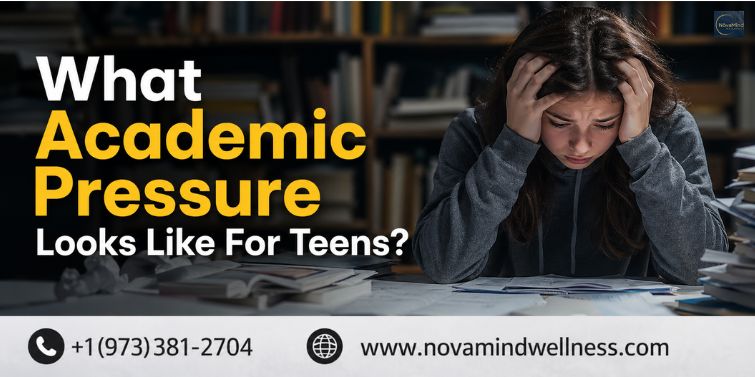
What Academic Pressure Looks Like For Teens?
School pressure can feel heavy for many teens. It may come from exams, grades, assignments, college plans, sports, family hopes, or comparing themselves with others.
Some teens feel they must always do well. One low mark can feel like a big failure. A missed deadline can make them feel behind. Over time, this pressure can affect their mood, sleep, and confidence.
The CDC notes that poor mental health can affect school, grades, decision-making, and overall health in young people. This is why academic stress should not be ignored.
Academic pressure is not always bad. A little pressure can help teens stay focused. But too much pressure can make studying harder. It can also make teens feel tired, worried, or stuck.
Common Anxiety Symptoms Teenagers May Show
Teens do not always say, “I am anxious.” Sometimes stress shows up in other ways. Parents and teachers may notice changes before the teen talks about them.
Common anxiety symptoms teenagers may show include:
- Trouble sleeping
- Headaches or stomach aches
- Fast heartbeat
- Worry before tests
- Avoiding schoolwork
- Irritability
- Low confidence
- Trouble focusing
- Feeling tired often
- Fear of making mistakes
AACAP explains that teen anxiety can include strong worry, inner restlessness, and feeling nervous even when there is no clear danger.
These signs do not mean a teen is weak or lazy. They may mean the teen needs better support.
How Academic Performance Anxiety Affects Daily Life?
Academic performance anxiety happens when a teen feels strong fear about grades, tests, assignments, or school results. The fear may feel bigger than the task itself.
A teen may study for hours but still feel unprepared. They may know the answers at home, but freeze during a test. They may avoid homework because starting feels too stressful.
Academic performance anxiety can affect:
- Test results
- Class participation
- Homework habits
- Sleep routine
- Friendships
- Family conversations
- Self-esteem
It can also lead to negative thoughts like:
- “I am not good enough.”
- “Everyone else is better.”
- “One mistake will ruin everything.”
- “My parents will be disappointed.”
Counseling helps teens notice these thoughts and replace them with more balanced ones.

How Counseling Helps Teens Manage Academic Pressure
Counseling provides teens with a private, safe space to talk about school stress. A counselor listens without judging. This alone can feel like a relief.
Many teens carry pressure silently. They may not want to worry their parents. They may feel embarrassed. They may think they should handle everything on their own.
Counseling helps by giving them tools, not just advice.
1. Counseling Helps Teens Understand Their Stress
A counselor helps teens understand what is causing the stress. Are there exams? Too many activities? Fear of failure? Poor sleep? Family pressure? Lack of time?
Once the cause is clear, the teen can work on real solutions.
2. Counseling Teaches Better Thinking Patterns
Academic pressure often intensifies due to harsh self-talk. A teen may think one bad grade means they are a failure.
Counseling helps teens question these thoughts. They learn to think more calmly.
For example:
| Stressful Thought | Balanced Thought |
| I failed one test, so I am bad at school. | One test does not define me. I can learn from it. |
| I must get perfect marks. | I can aim high without being perfect. |
| Everyone is ahead of me. | I can focus on my own progress. |
This can reduce academic performance anxiety over time.
3. Counseling Builds Academic Stress Coping Strategies
Counselors teach teens coping strategies for academic stress that they can use in real life. These may include:
- Making a study plan
- Breaking big tasks into small steps
- Practicing deep breathing
- Taking short breaks
- Setting realistic goals
- Preparing for tests early
- Asking for help sooner
- Using a sleep routine
The APA notes that young people can learn to spot signs of stress and manage it with the right tools and support.
4. Counseling Helps With Time Management
Many teens feel stressed because everything feels urgent. Homework, tests, projects, and activities may pile up.
A counselor can help a teen make a simple weekly plan. This plan can include study time, rest time, meals, sleep, and fun.
Good planning does not remove all pressure. But it makes school feel more manageable.
5. Counseling Improves Communication
Some teens struggle to tell parents or teachers what they need. They may shut down, argue, or avoid talking.
Counseling can help teens clearly express their feelings. They can learn how to say:
- “I need help planning my work.”
- “I feel nervous before tests.”
- “I need a short break.”
- “I am trying, but I feel overwhelmed.”
This can reduce tension at home and school.
Teen Therapy for Managing Academic Stress Effectively
Help your teen navigate academic stress with supportive, professional therapy. Build healthy coping skills, improve focus, and boost confidence in school and life. Compassionate care helps teens feel understood, balanced, and ready to succeed.
Start With a Free ConsultationAcademic Stress Coping Strategies Teens Can Use
Here are simple academic stress coping strategies teens can try.
Create A Small Study Plan
Do not try to study everything at once. Pick one subject. Choose one topic. Study for a short time. Then take a break.
Use The Two-Minute Start
When a task feels hard, start for just two minutes. Open the book. Write the heading. Read the first question. Starting is often the hardest part.
Take Care Of Sleep
Sleep helps memory and focus. AACAP recommends enough sleep, regular exercise, healthy eating, and relaxation exercises for teen stress management.
Practice Calm Breathing
Slow breathing can help the body settle. Teens can breathe in slowly, pause, and breathe out slowly. This can help before tests or presentations.
Limit Comparison
Comparing grades with friends can increase stress. It is better to track personal progress.
Ask For Help Early
Teens should not wait until they feel lost. They can ask a teacher, parent, tutor, or counselor for help early.
Nova Mind Wellness is mentioned here because many families seek guidance when school pressure begins to affect daily life.
How Parents Can Support Teens
Parents play a major role. Support does not mean removing all pressure. It means helping teens feel safe while they learn responsibility.
Parents can help by:
- Listening before giving advice
- Avoiding harsh comments about grades
- Asking what kind of help the teen wants
- Encouraging breaks and sleep
- Praising effort, not only results
- Watching for ongoing stress signs
- Reaching out for support when needed
A calm home environment can make school pressure easier to handle.
FAQs
1. What Is Academic Performance Anxiety?
Academic performance anxiety is a strong worry about school results, tests, grades, or assignments. It can make studying, focusing, and test-taking harder.
2. What Are Common Anxiety Symptoms Teenagers Show During School Stress?
Common anxiety symptoms teenagers may show include sleep problems, headaches, stomach aches, irritability, fear of tests, trouble focusing, and avoiding schoolwork.
3. Can Counseling Help With Academic Stress?
Yes. Counseling can help teens understand stress, manage worry, build study habits, improve confidence, and learn healthy coping skills.
4. What Are Simple Academic Stress Coping Strategies?
Helpful academic stress coping strategies include making a study plan, taking breaks, sleeping well, asking for help, practicing breathing, and breaking big tasks into smaller steps.
5. When Should Parents Consider Counseling For A Teen?
Parents may consider counseling when stress affects sleep, mood, school attendance, grades, confidence, or daily life for more than a short time.
6. Is Academic Stress Normal For Teens?
Some stress is normal. But stress becomes a concern when it feels constant, affects health, or stops a teen from doing normal activities.
7. How Can Teens Reduce Test Anxiety?
Teens can prepare early, practice sample questions, sleep well, use calming breathing techniques, and avoid last-minute cramming.
Final Thoughts
Academic pressure is common, but teens should not have to handle it alone. Counseling helps teens understand their stress, manage worry, and build better habits. It also helps them see that grades matter, but their health and confidence matter too.
With the right support, teens can learn how to face school challenges more healthily. Nova Mind Wellness appears here as part of the requested blog context, while the main message stays simple: teens need support, patience, and practical tools.
“Support your teen early, listen with patience, and help them build calm confidence before school pressure becomes too heavy.”