Objective
This blog helps parents recognize rejection sensitive dysphoria in their ADHD teen, understand why it happens, and know what treatment actually looks like at NōvaMind Wellness in Morris Plains, New Jersey.
Key Takeaways
- Rejection sensitive dysphoria (RSD) is an intense emotional reaction to perceived criticism or rejection, and it’s common in teens with ADHD.
- RSD is not a diagnosis on its own. It’s a symptom cluster tied to ADHD-related emotional dysregulation.
- Left unaddressed, RSD can look like defiance, anxiety, or depression, which is why it gets missed at home and in school.
- Treatment combines therapy, family involvement, and sometimes medication management, not a single quick fix.
- NōvaMind Wellness offers IOP and outpatient care in Morris County built around teens who need this kind of emotional support.
Table of Contents
- What Is Rejection Sensitive Dysphoria?
- How RSD Shows Up in ADHD Teens
- Why ADHD Teens Are Wired for This Reaction
- Real Scenarios Parents in Morris County Will Recognize
- RSD vs. Normal Teen Moodiness
- How Treatment for Rejection Sensitive Dysphoria Works
- What Treatment Costs and How Insurance Fits In
- FAQs
- Conclusion
Your son gets one piece of corrective feedback from a teacher and shuts his laptop for the rest of the night. Your daughter reads a text message twice, decides her friend is mad at her, and spirals into tears over nothing anyone can point to. You’ve asked if everything’s okay. You’ve asked if something happened at school. The answer is always some version of “I don’t know,” and you’re left wondering if this is normal teenage moodiness or something else.
For a lot of families raising a teen with ADHD, this is rejection sensitive dysphoria, and it rarely gets named until someone outside the house says it out loud.
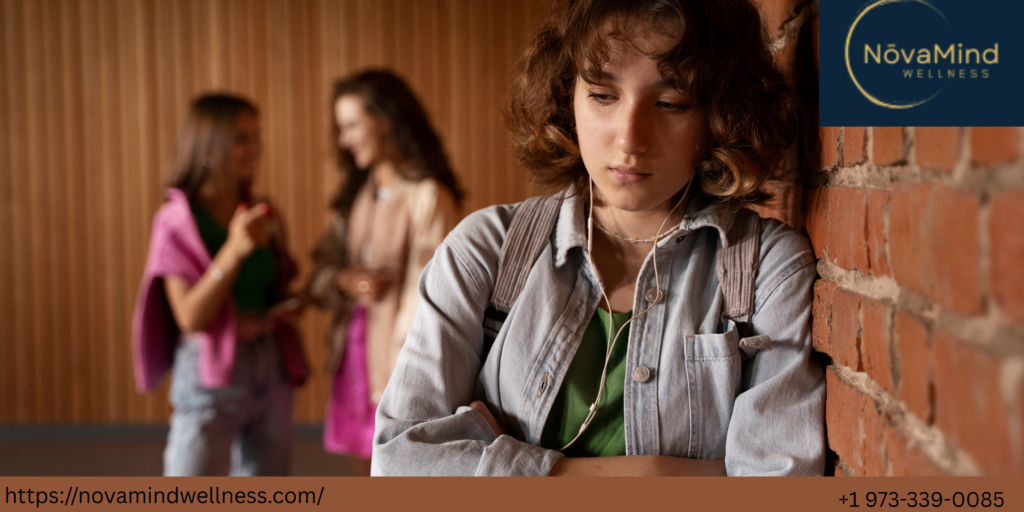
RSD doesn’t show up on a report card. It shows up in slammed doors, canceled plans, and a kid who suddenly refuses to try out for the team because failing feels worse than not showing up at all. Parents often mistake it for attitude. Teachers mistake it for a discipline problem. Underneath both is a nervous system that reacts to rejection like it’s a physical threat.
If any of this sounds familiar, contact our team at NōvaMind Wellness for a confidential assessment. Understanding what’s driving these reactions is the first real step toward helping your teen.
What Is Rejection Sensitive Dysphoria?
Rejection sensitive dysphoria is an intense emotional response to real or perceived criticism, rejection, or failure. The word “dysphoria” here means a wave of emotional pain, not a clinical mood disorder on its own.
It’s not officially listed in the DSM-5. Clinicians who work with ADHD, though, recognize it as one of the more disruptive parts of adhd emotional dysregulation, and it’s one of the most commonly reported experiences among teens and adults with ADHD.
The reaction happens fast. A teen with RSD doesn’t process feedback and then get upset later. The hurt hits almost instantly, before the brain has time to sort out whether the rejection was even real.
How RSD Shows Up in ADHD Teens
Every teen has bad days. Rejection sensitive dysphoria looks different because the reaction is disproportionate to what triggered it, and it happens over and over in similar situations.
Common signs include:
- Sudden tears, rage, or shutdown after minor criticism
- Avoiding new activities, sports, or classes out of fear of not being good enough
- Reading rejection into neutral situations, like an unanswered text
- People-pleasing to the point of exhaustion, just to avoid disapproval
- Giving up on tasks the moment something feels hard or imperfect
- Physical symptoms during an episode, like a racing heart or stomachache
Parents usually describe the shift as sudden. One minute their teen is fine, the next they’re inconsolable or completely withdrawn, and there’s no clear line connecting the two.

What RSD Feels Like From the Inside
Teens who can describe it later often say the feeling is closer to physical pain than sadness. Some compare it to being punched. Others say it feels like everyone in the room can suddenly see every flaw they have. That intensity is why RSD gets mistaken for an overreaction instead of what it actually is: a real neurological response.
Why ADHD Teens Are Wired for This Reaction
ADHD affects more than attention and impulse control. It also affects the brain’s ability to regulate emotional intensity, which is why rsd adhd cases show up together so often in clinical practice.
The prefrontal cortex, which normally puts the brakes on a strong emotional reaction, works differently in ADHD brains. Add in years of being told to “try harder,” “pay attention,” or “stop being so sensitive,” and many ADHD teens build up a deep fear of disappointing people. That history doesn’t cause RSD by itself, but it makes each new rejection land harder.
This is a real symptom pattern, not a character flaw, and it responds to treatment the same way other parts of ADHD emotional regulation do.
Real Scenarios Parents in Morris County Will Recognize
The group chat spiral. A teen sees three friends made weekend plans without including them. Instead of asking what happened, they assume they’re being excluded on purpose and stop responding to the group entirely for days.
The classroom freeze. A teacher corrects a wrong answer in front of the class. The teen shuts down for the rest of the period, convinced everyone thinks they’re stupid, even though nobody else remembers the moment by lunch.
The quit-before-you-fail pattern. A teen who was excited about trying out for a school play suddenly says they don’t care about it anymore, the week before auditions. Backing out feels safer than risking a rejection they can’t control.
We hear versions of these stories often from families across Morris County, from Morristown to Parsippany to Madison and Randolph. The details change. The pattern doesn’t.
RSD vs. Normal Teen Moodiness
Parents often ask how to tell the difference between typical teenage emotion and something that needs professional attention. Here’s a side-by-side look.
| Situation | Typical Teen Reaction | Rejection Sensitive Dysphoria |
| Friend cancels plans | Mild annoyance, moves on within hours | Assumes they did something wrong, ruminates for days |
| Gets corrected in class | Brief embarrassment | Intense shame, avoids raising hand for weeks |
| Doesn’t make a team | Disappointed, talks about trying again | Refuses to try out for anything again |
| Receives feedback on schoolwork | Shrugs it off or adjusts | Meltdown, shutdown, or defensive anger |
| Unanswered text message | Doesn’t think much of it | Convinced the friendship is over |
If the reaction in the right column sounds like your teen’s default setting rather than an occasional bad day, that’s worth evaluating with a professional.
How Treatment for Rejection Sensitive Dysphoria Works
There’s no single pill or session that resolves rejection sensitive dysphoria. Real progress comes from a combination of approaches, built around the teen and the family together.
Step 1: Assessment. A clinician evaluates how ADHD, emotional regulation, and any co-occurring anxiety or depression are interacting. Verify your insurance beforehand so you know what’s covered before you start.
Step 2: Individual therapy. Cognitive Behavioral Therapy (CBT) and Dialectical Behavior Therapy (DBT) both help teens catch the automatic thought (“they hate me”) before it turns into a full emotional spiral.
Step 3: Family involvement. Parents learn how to respond during an episode without escalating it, and how to give feedback in ways that don’t trigger the same shutdown every time.
Step 4: Medication management, when appropriate. For some teens, treating the underlying ADHD with medication reduces the intensity of RSD episodes. This isn’t the right fit for every teen, and a psychiatric provider should make that call individually.
Step 5: Structured support, if daily life is affected. When RSD and adhd emotional dysregulation are disrupting school attendance or relationships regularly, a more structured level of care helps. Our Intensive Outpatient Program gives teens after-school support multiple days a week without pulling them out of school, and our treatment services page breaks down every level of care we offer.
There’s no guaranteed timeline. Some families see noticeable change within a few weeks of consistent therapy. Others need several months, especially when RSD has been building for years. What matters is a plan that adjusts as the teen responds.
Is Your Teen Struggling With Rejection Sensitive Dysphoria?
Intense emotional reactions to criticism or rejection may be more than typical teen behavior. Learn how compassionate, evidence-based care can help your teen build emotional resilience and confidence.
Schedule A Confidential AssessmentWhat Treatment Costs and How Insurance Fits In
Cost is usually the first question after “will this actually help.” NōvaMind Wellness works with most major insurance plans, which can cover up to 100% of program costs depending on your policy.
Before committing to anything, our team can check your specific benefits and walk you through what’s covered for outpatient or IOP care. Start a confidential insurance verification here, and someone from our admissions team will follow up with real numbers, not a guess.
Mid-post note for families weighing next steps: you don’t need to have a diagnosis figured out before reaching out. Call our admissions team at (973) 828-8075 and describe what you’re seeing. We’ll help you figure out the right next step from there.
FAQs
What does a rejection sensitive dysphoria episode actually look like?
It usually starts fast, a comment or perceived slight, followed by tears, anger, or complete withdrawal within minutes. The reaction is out of proportion to the trigger and often followed by shame or embarrassment once it passes.
Is rejection sensitive dysphoria the same thing as being oversensitive?
No. RSD is tied to how the ADHD brain processes emotional pain, not a personality trait a teen can just decide to change. Telling a teen to “toughen up” usually makes the pattern worse.
Can a teen have RSD without an ADHD diagnosis?
It’s possible to have strong rejection sensitivity without ADHD, but the combination of rsd adhd symptoms together is far more common and tends to be more intense.
Does insurance cover treatment for ADHD emotional dysregulation?
Most major insurance plans cover therapy and psychiatric care related to ADHD, including emotional regulation support. Coverage details vary by plan, which is why we recommend verifying benefits before starting.
How long does it take to see improvement?
Some families notice change in a few weeks of consistent therapy. More significant patterns, especially ones that have been building for years, often take a few months of structured work to shift.
What if my teen won’t admit anything is wrong?
This is common. Teens with RSD often hide how much a rejection affected them because talking about it feels like another risk. A trained therapist knows how to build trust before pushing for specifics.
Do you treat teens from outside Morris Plains?
Yes. We work with families throughout Morris County, including Morristown, Parsippany, Madison, and Chatham, along with surrounding areas across New Jersey. Both in-person and virtual options are available depending on the program.
Is IOP or regular outpatient therapy the right fit for my teen?
It depends on how much RSD is disrupting daily functioning. If it’s affecting school attendance, friendships, or family life regularly, IOP offers more structured support. If episodes are less frequent, outpatient therapy may be enough. Our clinical team can help you decide during the initial consultation.
Can medication alone fix rejection sensitive dysphoria?
Medication can reduce the intensity of ADHD symptoms, which sometimes eases RSD episodes, but it rarely resolves the pattern completely on its own. Most teens need therapy alongside any medication plan.
What’s the first step if I want to get my teen evaluated?
Call our admissions team or fill out a confidential form on our contact page. We’ll ask a few questions about what you’re seeing at home and set up an initial consultation from there.
Conclusion
Rejection sensitive dysphoria isn’t your teen being dramatic, and it isn’t a parenting failure. It’s a real, treatable part of how ADHD affects emotional regulation, and the sooner it’s addressed, the less it dictates your teen’s choices about friendships, school, and their own confidence.
If you recognize your teen in any of these scenarios, NōvaMind Wellness in Morris Plains, NJ is here to help your whole family work through it. Contact us today or call (973) 828-8075 for a confidential assessment. For more on related warning signs, read our post on early warning signs of anxiety and depression in teens.
This content is for informational purposes and reviewed for clinical accuracy by the NōvaMind Wellness treatment team. It is not a substitute for a professional diagnosis or individualized medical advice.