
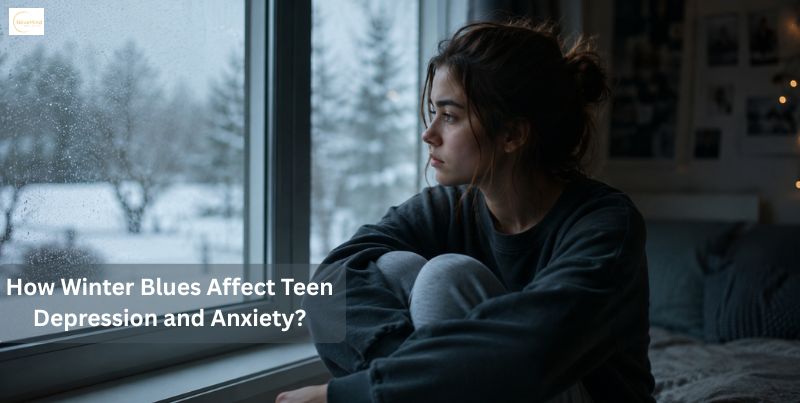
When the days get shorter, some teenagers do not just feel cold, they feel like a completely different person.
Most parents assume it is typical teenage moodiness. But there is a real difference between a rough week and a pattern that shows up every winter and disappears every spring. Seasonal affective disorder in teens is a genuine clinical condition, not laziness, not attitude, and not something that fixes itself. According to the American Academy of Pediatrics, roughly 3 to 5 percent of teenagers experience seasonal affective disorder, with many more experiencing milder but still disruptive winter mood changes.
Nova Mind Wellness works with adolescents and families navigating exactly this. Winter is consistently one of the busiest periods for teen mental health concerns, and understanding why helps parents respond earlier and more effectively.
Objective
This blog helps parents, caregivers, and teenagers understand how winter affects teen mental health, what seasonal depression and anxiety look like in adolescents, and what practical steps actually help.
Key Takeaways
- Seasonal affective disorder in teens is a clinical condition tied to reduced winter sunlight
- Seasonal depression symptoms in teenagers often look different from adult depression
- Winter anxiety symptoms are common alongside low mood and are frequently missed
- Early recognition improves outcomes, most teens respond well to the right support
- Light therapy, lifestyle changes, and professional support all play a role
Table of Contents
- What Winter Blues Actually Mean for Teenagers
- Seasonal Affective Disorder in Teens, What It Is
- Why Teenagers Are More Vulnerable in Winter
- Seasonal Depression Symptoms in Adolescents
- Winter Anxiety Symptoms in Teens
- How Winter Disrupts Sleep, Energy, and School
- Winter Blues vs Clinical Seasonal Depression
- What Actually Helps
- When to Seek Professional Support
- FAQs
- Conclusion
What Winter Blues Actually Mean for Teenagers?
The term winter blues is used loosely to describe feeling flat or unmotivated during the cold months. For most people, it is mild. For some teenagers, it goes much further.
Winter brings three things that directly affect mood: less sunlight, less physical activity, and more time spent indoors and isolated. For adolescents already dealing with the pressures of teenage life, these factors combine to create a genuine disruption of daily functioning.
The winter blues sit on a spectrum. At one end is a mild low mood that improves with small changes. At the other end is full seasonal affective disorder requiring clinical treatment. Most struggling teenagers fall somewhere between these two points.
Seasonal Affective Disorder in Teens, What It Is
Seasonal affective disorder in teens is a type of depression that follows a consistent seasonal pattern, typically starting in late autumn, peaking in January and February, and lifting in spring. It is classified in the DSM-5 as major depressive disorder with a seasonal pattern.
For teenagers, it is frequently underdiagnosed because:
- Winter low mood gets blamed on school stress or typical teen behavior
- Teens rarely connect their current mood to what happened in the same months last year
- Parents and teachers may not notice the seasonal pattern until it has repeated multiple times
- Teenagers are less likely to report mental health symptoms voluntarily than adults
The condition is real, and it repeats. That repetition, the same seasonal dip, year after year, is one of the defining characteristics that separates SAD from other forms of depression.
Why Teenagers Are More Vulnerable in Winter?
Adolescents are more sensitive to seasonal mood changes than most adults for several connected reasons.
- Melatonin sensitivity: Teenagers already produce melatonin differently from adults. In winter, reduced light exposure extends this further, making teens feel heavier and more disengaged during daylight hours.
- Serotonin fluctuation: Less sunlight means less serotonin stimulation. Serotonin regulates mood, appetite, and sleep. Adolescent brains are still developing the regulatory systems that help adults buffer against these shifts.
- Social withdrawal: Teenagers’ mental health depends heavily on peer connections. Winter naturally reduces outdoor socializing, and teens feel that loss acutely.
- Academic pressure: Winter term often overlaps with exams and deadlines, adding significant stress exactly when mood and energy are already reduced.
- More screen time: More indoor hours often mean more screen time, which disrupts sleep and reduces the physical activity that helps regulate mood.
Seasonal Depression Symptoms in Adolescents
Seasonal depression symptoms in teenagers do not always look like textbook depression. Adolescent presentations often differ from those of adults.
Watch for these signs, particularly if they appear or worsen in autumn and winter:
- Sleeping significantly more than usual, but still waking exhausted
- Extreme difficulty getting out of bed in the morning
- Increased appetite, especially for carbohydrates and sweet foods
- Withdrawing from friends and activities they normally enjoy
- Grades dropping or sustained difficulty concentrating
- Persistent low mood that does not lift even on weekends
- Irritability that feels out of proportion to the situation
- Loss of interest in things they genuinely cared about
- Feeling hopeless without a clear reason
The key distinction from normal teenage moodiness is duration and impact. These symptoms last weeks, not days, and they interfere with school, friendships, and family life.
Winter Anxiety Symptoms in Teens
- Persistent worry that is hard to control or switch off
- Physical symptoms with no clear medical cause, racing heart, stomach discomfort, tightness in the chest
- Avoiding school, social situations, or activities due to fear or dread
- Heightened sensitivity to criticism or perceived rejection
- Difficulty sleeping because of racing thoughts
- Reassurance-seeking increases noticeably through the winter months
- Occasional panic attacks or sudden overwhelming feelings
Anxiety frequently accompanies seasonal depression and is often missed entirely. Winter anxiety symptoms in teenagers include:
Winter creates specific anxiety triggers, end-of-year academic pressure, reduced social contact, and more time in environments where family tension is harder to escape. Some teenagers experience anxiety that consistently escalates between November and February and settles noticeably in spring, a winter-pattern anxiety that mirrors the seasonal structure of SAD.
Helping Teens Stay Positive During Winter Months
Winter months can take a toll on teens’ mood and energy. This guide shares simple, practical ways to help them stay positive—building healthy routines, encouraging connection, and supporting emotional well-being even during darker, colder days.
Start With A Free ConsultationHow Winter Disrupts Sleep, Energy, and School?
Sleep disruption is one of the most significant ways winter impacts teens, and it creates a cascade of other problems.
Reduced light exposure shifts the body’s internal clock later. Teenagers already tend toward later sleep cycles. In winter, this gets pushed further. Because school times do not change, teens end up chronically sleep-deprived through the coldest months.
The consequences are practical and serious:
- Difficulty concentrating in morning classes
- Impaired memory during exams
- Lower emotional regulation, small frustrations feel much bigger
- Reduced motivation for homework and revision
- Increased reliance on caffeine, which makes sleep quality worse
Academic dips in the winter term are frequently blamed on effort or attitude. Often, the real cause is biological, a disruption of sleep and mood driven by seasonal changes in light, not a character problem.
Winter Blues vs Clinical Seasonal Depression
Not every teenager who feels low in winter has clinical SAD. Understanding the difference helps determine what level of support is appropriate.
| Feature | Winter Blues | Seasonal Affective Disorder |
| Duration | Days to a couple of weeks | Months — typically November to March |
| Functional impact | Mild — daily life mostly continues | Significant — school and relationships affected |
| Seasonal pattern | Not necessarily consistent | Repeats in the same months each year |
| Response to self-care | Usually improves | May need professional treatment |
If your teenager’s difficulties last more than two weeks, significantly affect their functioning, and follow a winter pattern — waiting is not the right strategy.
What Actually Helps?
Several approaches have solid evidence behind them for seasonal mood and anxiety in teenagers.
- Light therapy: A 10,000 lux bright light lamp used for 20 to 30 minutes each morning compensates for reduced natural light and helps regulate the body’s internal clock. Results are often noticeable within one to two weeks. Starting in early autumn, before symptoms peak, works better than starting after they are already severe.
- Consistent sleep schedule: Going to bed and waking at the same time every day, including weekends, anchors the circadian rhythm and reduces the sleep disruption that amplifies seasonal symptoms. This single change is more impactful than most people expect.
- Physical activity: Exercise raises serotonin and endorphin levels. Even 30 minutes of moderate activity three to four times per week produces measurable mood benefits. It does not need to be intense, walking counts.
- Outdoor time in daylight: Even on overcast winter days, outdoor light is far brighter than indoor lighting. Encouraging teenagers to spend time outside during the brightest part of the day, even briefly, supports the link between light and serotonin.
- Maintaining social connection: Social withdrawal feels natural when mood is low, but consistently makes things worse. Deliberate effort to maintain peer contact through winter, even in smaller, lower-effort ways, protects against isolation.
When to Seek Professional Support
Some situations need more than lifestyle adjustments. Seek professional help promptly if your teenager:
- Expresses hopelessness or thoughts of self-harm
- Has stopped attending school or withdrawn from all social contact
- Is sleeping more than twelve hours a day consistently
- Has lost significant weight or is refusing to eat
- Describes feeling like nothing will ever improve
Nova Mind Wellness works with adolescents experiencing seasonal depression and anxiety, providing assessment and evidence-based support that treats winter mental health challenges as the serious clinical concerns they are.
Early support consistently produces better outcomes than waiting for things to improve on their own.
FAQs
Is Seasonal Affective Disorder in Teens Different From Adult SAD?
The core biology is the same, but the presentation differs. Teenagers with SAD more commonly show hypersomnia, increased appetite, carbohydrate craving, and social withdrawal rather than the classic sad mood adults describe. Irritability is also more prominent in adolescent SAD, which makes it harder to recognize as depression rather than an attitude.
Can Winter Anxiety Symptoms Appear Without Depression?
Yes. Some teenagers experience significant anxiety in winter without a prominent low mood. Winter-pattern anxiety, where worry and avoidance escalate from autumn through winter, is clinically common. Anxiety and depression also frequently occur together in the same teenager.
Does Light Therapy Work for Teenagers?
There is good evidence for light therapy in adolescent seasonal affective disorder. A 10,000 lux lamp used for 20 to 30 minutes each morning, consistently throughout winter, reduces seasonal depression symptoms in most people who use it correctly and regularly.
How Do I Know If My Teen Has SAD or Is Just Stressed About School?
The key indicator is the seasonal pattern. School stress is present year-round. SAD consistently worsens from October through February and improves in spring. If your teenager’s difficulties are notably worse in winter specifically, and this has been true for more than one year, SAD is worth discussing with a clinician.
Conclusion
Winter is hard for a lot of teenagers, and for some, it is genuinely more than a rough few months.
Seasonal affective disorder and winter anxiety are real, common in adolescents, and respond well to proper support when recognized early. The combination of less light, disrupted sleep, reduced activity, and academic pressure creates real mental health challenges that deserve to be taken seriously.
Understanding what is happening is the first step toward helping. Nova Mind Wellness supports teenagers and families through exactly this, with care that treats seasonal mental health challenges as the real clinical concerns they are