

Medically Reviewed by: Akhtar Hossain, Physician – expert in helping teen with serious mental illnesses, including but limited to Major depression, bipolar disorder, schizophrenia, anxiety, ADHD, autistic spectrum disorder, substance use disorders.
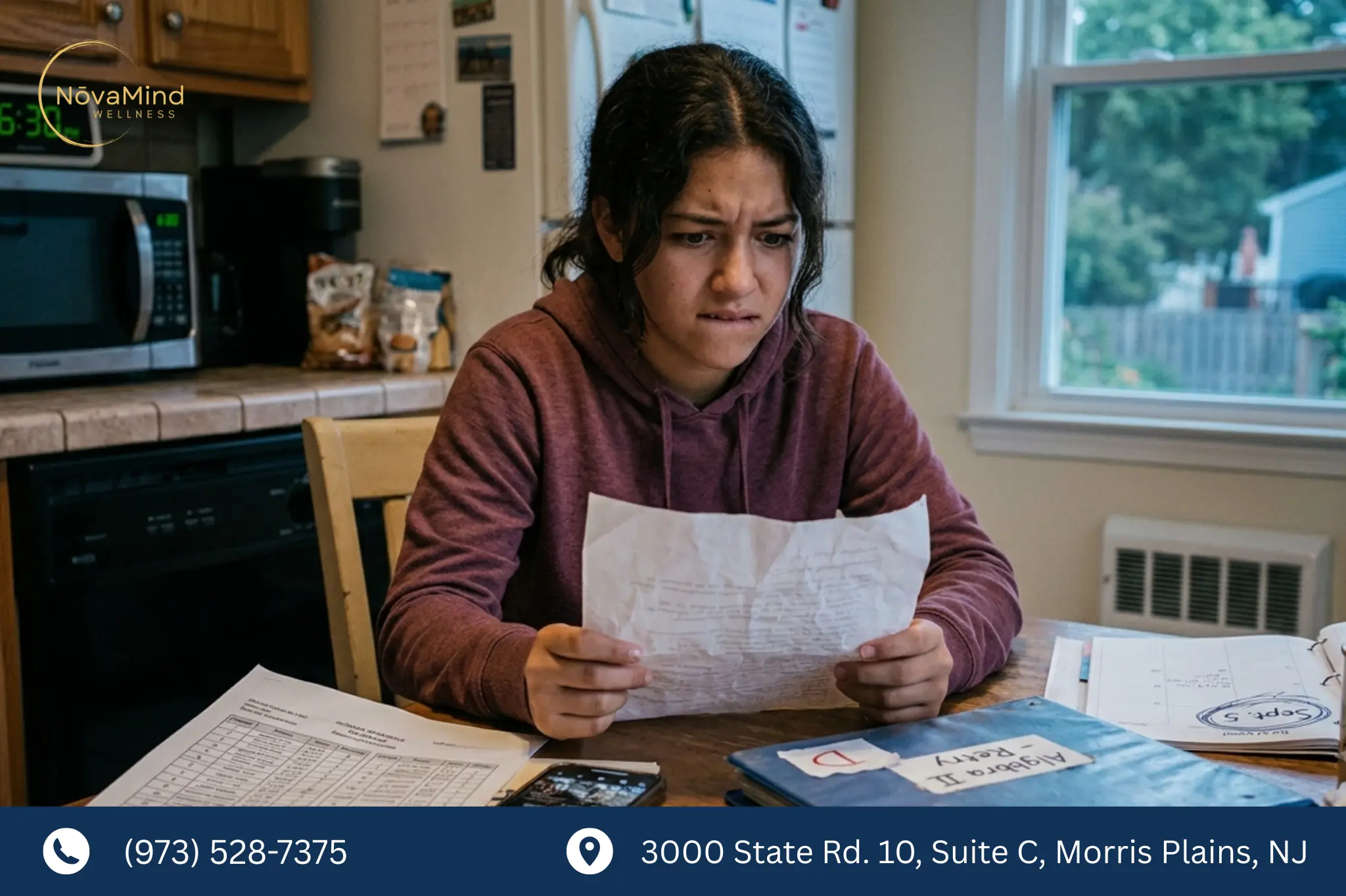
Some nervousness before the first day is normal — new teachers, new schedules, a summer routine ending. But for a meaningful subset of teens, that nervousness doesn’t fade once school starts. It builds. According to the Anxiety and Depression Association of America, roughly 2–5% of children and teens experience anxiety severe enough to cause outright school refusal, and a much larger share experience significant back-to-school anxiety that falls short of refusal but still disrupts sleep, mood, and daily functioning throughout August and September.
If you’re noticing your teen unusually withdrawn, irritable, or physically unwell as the new school year approaches, this guide breaks down what’s normal, what’s not, and when to get help — before patterns set in for the whole year.
Quick Answer: Is My Teen’s Back-to-School Anxiety Normal?
Mild nervousness in the days before school starts, that resolves within the first week or two, is developmentally normal. It becomes a clinical concern when the anxiety persists past the first few weeks, involves physical symptoms (stomachaches, nausea, headaches), or leads to avoidance — repeated requests to stay home, morning meltdowns, or outright refusal to attend. The single biggest predictor clinicians look for isn’t the worry itself; it’s whether avoidance is starting to work, meaning your teen successfully avoids school and the anxiety temporarily drops, which reinforces the pattern going forward.
Why Back-to-School Anxiety Spikes for Some Teens and Not Others
Back-to-school anxiety rarely comes from one cause. It’s usually a combination of a changed routine and a specific underlying trigger:
| Trigger | Why It Fuels Anxiety |
|---|---|
| Grade transitions (elementary→middle, middle→high school) | New building, new social hierarchy, higher academic stakes — research links these transition years to measurably higher rates of school-related anxiety |
| Social reentry | Worry about friend groups shifting over summer, or renewed social comparison after a summer of heavy phone use |
| Academic pressure carryover | A difficult prior year (a failed class, falling behind) creates dread tied specifically to returning |
| Underlying anxiety or depression | Existing anxiety disorders often intensify around any major routine disruption, and back-to-school is one of the biggest of the year |
| Bullying or unresolved conflict | Anticipating a return to an unresolved social situation from the previous year |
| Sleep-schedule whiplash | Summer sleep schedules shifting abruptly back to early mornings independently worsens mood regulation and anxiety symptoms |
Detection: Specific Signs to Watch For in the Weeks Before and After School Starts
| Category | Specific Signs |
|---|---|
| Physical | Stomachaches or nausea concentrated in the morning · headaches that ease once the school day is avoided · trouble falling asleep the night before school days specifically · appetite loss around school mornings |
| Emotional | Dread expressed days in advance (“I don’t want summer to end” tipping into genuine panic) · irritability that spikes specifically on Sunday evenings or school mornings · tearfulness with no clear single cause |
| Behavioral | Repeated requests to stay home with vague symptoms · slow-motion mornings (dragging out getting ready) · asking excessive reassurance questions about the school day · avoiding school-related conversations entirely |
| Cognitive | Catastrophic predictions about the school year (“Everyone will have moved on without me,” “I’m going to fail again”) · difficulty concentrating on anything school-adjacent, including shopping for supplies |
A specific detection cue clinicians rely on: true back-to-school anxiety symptoms cluster tightly around school-related cues — Sunday nights, morning routines, school-supply shopping — rather than appearing evenly across the whole week. If the anxiety is present constantly and isn’t specifically worse around school triggers, it may point to a broader anxiety disorder rather than a back-to-school-specific pattern.
Normal Jitters vs. Back-to-School Anxiety vs. School Refusal
| Normal Jitters | Back-to-School Anxiety | School Refusal | |
|---|---|---|---|
| Timing | First 1–3 days only | Persists 2+ weeks | Ongoing, often worsening |
| Physical symptoms | Minimal | Present most school mornings | Severe, disabling on school days |
| Attendance | Unaffected | Attends, but with visible distress | Repeated absences or partial days |
| Resolves once at school | Yes, quickly | Sometimes, but distress returns each morning | Often does not resolve; may escalate |
Bold and worth repeating: clinical research on school-refusing youth finds that a majority meet criteria for a diagnosable anxiety or mood disorder — studies report comorbidity rates ranging from roughly 53% up to over 80% depending on the sample. School refusal is very rarely “just” a motivation problem; it is most often a visible symptom of an underlying, treatable condition.
What This Looks Like at Different Transition Points
| Situation | Common Pattern |
|---|---|
| Elementary → middle school | Separation-anxiety-flavored distress; worry about navigating a bigger building and multiple classrooms |
| Middle → high school | Social-status anxiety; fear of not fitting into a larger, less familiar peer group |
| Returning after a difficult prior year | Anticipatory dread tied to a specific class, teacher, or social conflict left unresolved |
| Returning after a mental health leave or hospitalization | Anxiety about reintegration, being asked questions by peers, or falling behind academically |
| A previously high-achieving teen showing new reluctance | Often linked to perfectionism colliding with a harder course load or increased expectations |
The Risk of Letting It Ride
It’s tempting to treat back-to-school anxiety as a phase that resolves itself. Sometimes it does. But the pattern clinicians see when it doesn’t tends to follow a predictable escalation:
| Timeframe | What Often Happens |
|---|---|
| Weeks 1–2 | Morning distress, occasional missed classes or partial days, still largely functional |
| Weeks 3–6 | Absences increase; avoidance begins “working,” reinforcing the cycle; academic gaps start forming |
| Month 2+ | Full-day avoidance becomes more frequent; social withdrawal deepens as peer relationships lapse from missed time; catching up academically becomes its own added stressor |
One 2024 study of over 2,000 adolescents found school-refusal behaviors present in nearly a third of the surveyed group, with excessive short-form video viewing identified as a contributing factor — a pattern worth knowing if your teen’s summer habits, discussed in our social media and teen mental health guide, have shifted heavily toward passive scrolling.
Know more:
- Understanding Teen Anxiety: Symptoms, Causes & When to Seek Help
- Teen Counseling & Psychiatry Services
Real Incident
A 13-year-old entering her first year of middle school developed stomachaches every school-day morning starting the week before classes began. Her pediatrician found no medical cause. A brief clinical conversation revealed intense worry about navigating a new building and eating lunch alone. Rather than a blanket “push through it” approach, a short course of anxiety-focused therapy combined with a practical plan — walking the school route beforehand, identifying one friend in her lunch period — reduced morning symptoms within about three weeks, and full attendance was restored by the end of the first month.
What Actually Helps Before the First Day
- Rebuild the sleep schedule 1–2 weeks early, not the night before — sudden schedule shifts independently worsen anxiety and mood
- Walk or drive the route to a new school building in advance to reduce novelty-driven dread
- Name one anchor — a friend, a familiar teacher, a favorite class period — your teen can look forward to specifically
- Avoid over-reassurance loops (“It’ll be fine, don’t worry” repeated on demand can unintentionally reinforce anxious checking rather than easing it)
- Watch the first two weeks closely, not just the first day — that’s the window where avoidance either resolves or starts to solidify
More Related topics:
When to Seek Professional Help
Consider a professional evaluation if, after the first two weeks of school, your teen still shows:
- Persistent morning physical symptoms with no medical explanation
- Repeated full or partial-day absences
- Visible dread that isn’t easing as routine sets back in
- Withdrawal from friends or previously enjoyed activities
- Signs the anxiety is broader than just school (present on weekends too)
If your teen expresses hopelessness or talks about self-harm, don’t wait for the pattern to develop further. Call or text 988 (Suicide & Crisis Lifeline) — free, confidential, 24/7. Text HOME to 741741 (Crisis Text Line). For immediate danger, call 911 or go to the nearest emergency room.
Support for Back-to-School Anxiety in Morris Plains, NJ
The first six weeks of a school year set the tone for the rest of it. Addressing back-to-school anxiety early — before avoidance has a chance to become a habit — is consistently associated with a faster, easier return to full attendance. Nova Mind Wellness provides evidence-based adolescent anxiety treatment for families throughout Morris Plains, Morristown, Parsippany, Randolph, Denville, Mountain Lakes, Madison, Chatham, and Florham Park, NJ.
Get Help and Verify Insurance today
Schedule an Evaluation Before the School Year Gets Harder to Catch Up On
📞 Call (973) 828-8075 📍 3000 State Rd. 10, Suite C, Morris Plains, NJ
Frequently Asked Questions (FAQs)
Q. Is it normal for teens to feel anxious before the first day of school?
Yes. Mild nervousness before a first day is developmentally typical and usually resolves within a few days. It becomes a concern when it persists for two or more weeks or involves physical symptoms and avoidance.
Q. How is back-to-school anxiety different from school refusal?
Back-to-school anxiety involves distress but the teen still attends. School refusal involves repeated absences or partial-day avoidance driven by that distress. Refusal is a more severe, escalated version of the same underlying pattern.
Q. What causes school refusal in teenagers who used to attend without issue?
It’s most often linked to an underlying anxiety or mood disorder, a specific unresolved social or academic stressor, or a major transition (a new school, a difficult prior year). It’s rarely a simple motivation issue.
Q. Can back-to-school anxiety cause physical symptoms like stomachaches?
Yes, very commonly. Morning stomachaches, nausea, and headaches with no medical cause are among the most frequent physical presentations of school-related anxiety in teens.
Q. Should I let my teen stay home if they say they feel too anxious for school?
Occasional flexibility during the adjustment period is reasonable, but repeated accommodation can reinforce avoidance. If requests to stay home are becoming frequent, that’s a signal to seek a professional evaluation rather than continue managing it day to day at home.
Q. How long does back-to-school anxiety usually last?
For most teens, it eases within the first two to three weeks as routine sets in. If it hasn’t improved by then, or is worsening, that’s the point to seek professional support rather than wait longer.
Q. Does changing schools make teen anxiety worse?
It can, particularly during major transitions like elementary-to-middle or middle-to-high school, which research links to elevated school-related anxiety due to new social hierarchies and higher academic stakes.
Q. Can therapy help before school even starts, or only once problems appear?
Both. A brief consultation before the school year begins can help build coping strategies proactively, especially for teens with a history of anxiety, rather than waiting until avoidance is already underway.
Q. Where can I find a therapist for school anxiety near Morris Plains, NJ?
Nova Mind Wellness, located in Morris Plains, NJ, provides evidence-based therapy for teens experiencing back-to-school anxiety and school refusal, serving families throughout Morris County including Morristown, Parsippany, Randolph, Denville, Mountain Lakes, Madison, Chatham, and Florham Park.
Q. Does Nova Mind Wellness offer evaluations for teens in Randolph or Denville before the school year starts?
Yes. Families throughout Morris County, including Randolph and Denville, can schedule a proactive evaluation ahead of the school year or seek support once symptoms appear — early evaluation is generally more effective than waiting.
Q. Is back-to-school anxiety covered by insurance in New Jersey?
Coverage depends on your specific plan. Nova Mind Wellness can verify your insurance benefits before your first appointment — visit the Verify Insurance page or call our office directly to confirm what’s covered.