
Medically Reviewed by: Akhtar Hossain, Physician – expert in helping people with serious mental illnesses, including but limited to Major depression, bipolar disorder, schizophrenia, anxiety, ADHD, autistic spectrum disorder, substance use disorders.
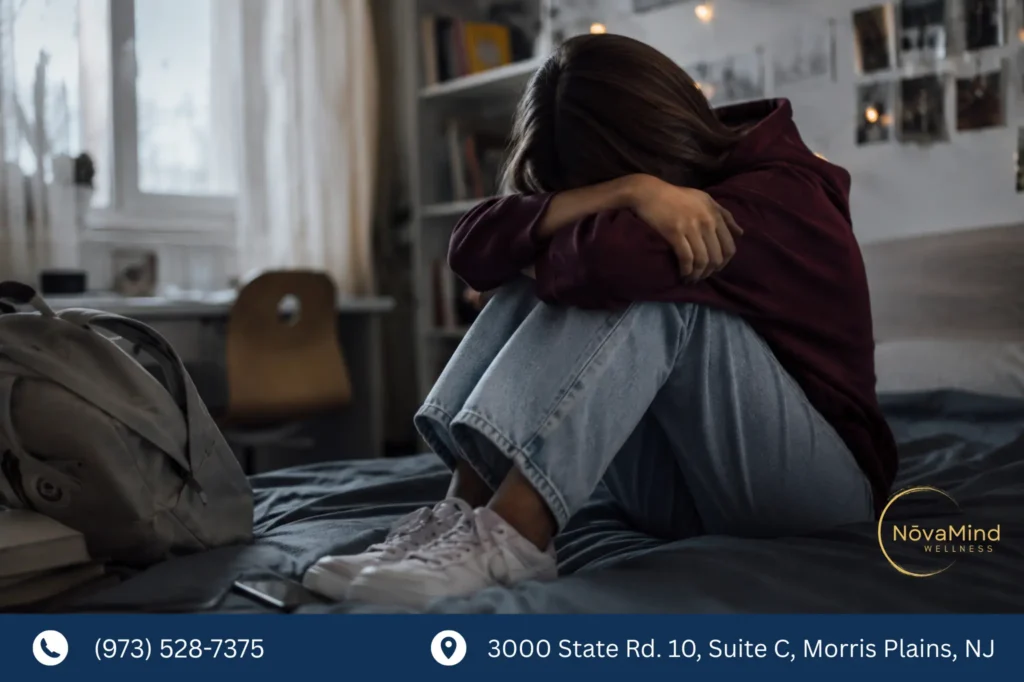
Your teenager used to fall asleep easily. Now they’re awake at midnight, stomach in knots, telling you they “just have a bad feeling” about tomorrow. Or maybe it’s the opposite — they’ve stopped texting friends back, stopped raising their hand in class, stopped wanting to leave the house at all.
You’re not imagining it, and you’re not overreacting. Anxiety disorders are now the most common mental health condition diagnosed in U.S. adolescents. According to the National Institute of Mental Health, an estimated 31.9% of teens ages 13–18 will experience a diagnosable anxiety disorder at some point before adulthood — and for 8.3% of them, it’s severe enough to significantly impair daily life.
If you’re here because you searched something like “is my teenager just stressed or is this anxiety,” this guide is built to answer that — and to help you figure out what to do next.
At Nova Mind Wellness, we work with teens and families across Morris Plains, Morristown, Parsippany, Randolph, Denville, Mountain Lakes, Madison, Chatham, and Florham Park, NJ who are asking exactly this question.
Quick Answer to How Do I Know if My Teen Has Anxiety?
Teen anxiety becomes a clinical concern — not just normal stress — when worry, fear, or physical tension is excessive relative to the actual situation, lasts most days for two weeks or longer, and starts interfering with school, friendships, sleep, or daily routines. The clearest sign isn’t the worry itself — every teenager worries — it’s the avoidance that follows: skipping class, dropping activities, withdrawing from friends, or refusing situations they used to handle fine. If avoidance is shrinking your teen’s world, it’s time for a professional evaluation.
Real Questions Parents Are Asking Right Now
Search data and our own intake calls tell us parents are typing very specific questions into Google late at night. Here are the ones we hear most, answered directly.
“Is my teenager just stressed, or is this an anxiety disorder?”
Stress is a reaction to a specific, identifiable pressure — a big test, a breakup, a college decision — and it eases once that pressure passes. Anxiety disorders are different: the worry is often disproportionate to the trigger, shows up even when nothing stressful is happening, and doesn’t resolve once the “reason” is gone.
“Can teen anxiety go away on its own?”
Mild, situational anxiety often does improve with time, support, and healthy coping skills. But research consistently shows that untreated anxiety disorders in adolescence rarely resolve completely without intervention — they tend to persist, and are strongly associated with the later development of depression. Waiting to “see if it passes” is reasonable for a few weeks; waiting for months while functioning declines is not.
“What does a panic attack actually look like in a teenager?”
Not always what parents expect. It can look like a racing heart and hyperventilating — or it can look like a sudden stomachache, a request to go to the nurse’s office, dizziness, or a teen insisting something is “physically wrong” right before a test or social event, with no medical cause found afterward.
“Is anxiety genetic, or did I do something wrong?”
Anxiety disorders run in families — having a parent with an anxiety disorder meaningfully raises a teen’s risk — but genetics is only one piece. Brain chemistry, temperament, life experiences, and environment all interact. Parenting is rarely the sole cause, and self-blame doesn’t help your teen get better.
“My teen refuses to go to therapy. Now what?”
This is one of the most common calls we get. Refusal is common and doesn’t mean therapy won’t work — it often means the teen is scared, doesn’t believe it will help, or fears being “labeled.” A brief, low-pressure consultation call (rather than committing to ongoing sessions up front) is often the easiest first step.
“Does anxiety cause physical symptoms like stomachaches and headaches?”
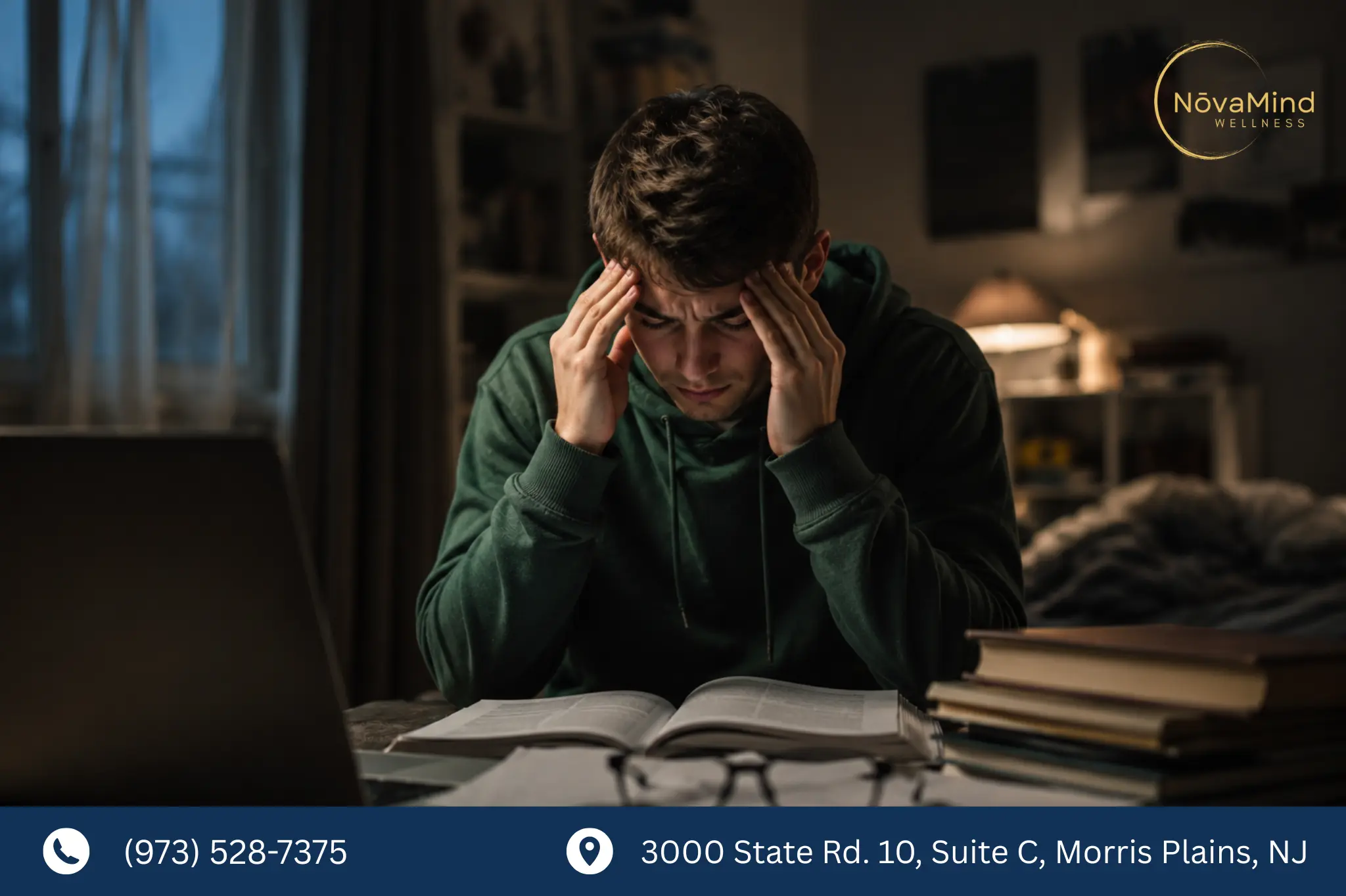
Yes, frequently — and this is one of the most under-recognized signs. Chronic muscle tension, headaches, stomachaches, nausea, and fatigue are extremely common physical presentations of anxiety in teens, and are often the first symptom a parent notices, well before any emotional symptoms are voiced.
Detection: What Teen Anxiety Actually Looks Like, Sign by Sign
Generic checklists (“worries a lot,” “seems stressed”) aren’t specific enough to act on. Here’s what anxiety more precisely looks like across four categories.
| Category | Specific Signs to Watch For |
|---|---|
| Physical | Frequent stomachaches or nausea with no medical cause · headaches · muscle tension, especially in shoulders/jaw · rapid heartbeat or “flutters” · shortness of breath · dizziness · fatigue despite adequate sleep · nail-biting, skin-picking, or hair-twirling that’s increased |
| Emotional | Persistent dread about upcoming events, even minor ones · irritability that spikes before school or social plans · feeling “on edge” most of the day · fear of being embarrassed or judged · intense need for reassurance (“Are you sure it’ll be fine?” asked repeatedly) |
| Behavioral | Avoiding specific classes, teachers, or social situations · asking to stay home with vague physical complaints on specific days (e.g., always Mondays, or days with presentations) · excessive checking behaviors (re-reading texts before sending, re-checking locks/homework) · sudden refusal of previously normal activities (sports, sleepovers, driving) |
| Cognitive | Catastrophic thinking (“If I fail this quiz, I’ll fail the class, I won’t get into college”) · difficulty concentrating because the mind is “stuck” on a worry · perfectionism that causes distress rather than motivation · trouble making decisions, even small ones |
A key detection cue clinicians look for: the pattern repeats around a specific trigger (a subject, a social setting, a performance situation) rather than appearing randomly. A teen who is anxious only before chemistry tests is showing something different — and often more specific and treatable — than a teen who feels anxious in almost every context.
Real-World Use Cases: What Teen Anxiety Looks Like by Type
“Anxiety” isn’t one condition — it’s a category. Knowing which type fits your teen changes what treatment looks like.
| Type | What It Looks Like Day-to-Day | Common Age of Onset |
|---|---|---|
| Generalized Anxiety Disorder (GAD) | Chronic, free-floating worry about many areas at once — grades, health, family, the future — even when things are going fine. Restlessness, trouble sleeping, difficulty “turning off” the mind. | Often begins mid-adolescence; NIMH data shows roughly 2.2% of teens meet criteria in their lifetime |
| Social Anxiety Disorder | Intense fear of being judged or embarrassed in front of peers. Avoids answering in class, eating in the cafeteria, or speaking on the phone. May have one or two close friends but panics at group settings. | Frequently emerges around early-to-mid adolescence |
| Panic Disorder | Sudden, intense episodes of physical symptoms (racing heart, chest tightness, dizziness) that feel like an emergency, followed by fear of the next attack — which itself becomes a source of anxiety. | Can emerge in mid-to-late adolescence |
| Separation Anxiety | Not just for young children — older teens can experience real distress about being away from a parent, refusing overnight trips, or repeatedly texting/calling for reassurance during school. | Can persist or re-emerge during adolescence, especially after a major life change |
| Specific Phobia | Intense, focused fear of one thing (driving, needles, flying, vomiting) that leads to elaborate avoidance strategies around that one trigger. | Can develop at any point in adolescence |
How Teen Anxiety Compares: Stress vs. Anxiety Disorder vs. Depression
Parents often can’t tell where normal teenage stress ends and a clinical concern begins — and anxiety and depression frequently overlap, which adds to the confusion.
| Feature | Normal Teen Stress | Anxiety Disorder | Depression |
|---|---|---|---|
| Trigger | Tied to a specific event | May occur without a clear trigger, or trigger is disproportionate to the reaction | Often not tied to a single event; persistent low mood |
| Duration | Resolves once the stressor passes | Persists most days for 2+ weeks, often longer | Persists most days for 2+ weeks, often longer |
| Core experience | Nervousness, focus | Dread, fear, physical tension | Sadness, emptiness, loss of interest |
| Energy | Normal or situationally low | Often restless, “wired” | Often low, fatigued |
| Avoidance pattern | Minimal | Common — avoids the feared trigger specifically | Common — withdraws broadly, loses interest in most things |
| Sleep | Occasional disruption | Trouble falling asleep due to racing thoughts | Sleeping far more or far less than usual |
Important overlap: Anxiety and depression co-occur in a large share of adolescents — anxiety that goes untreated is one of the strongest known predictors of a later depressive episode. If your teen shows a mix of symptoms from both columns, that’s not a contradiction; it’s common, and it’s exactly the kind of pattern a comprehensive evaluation is designed to sort out. (For a deeper look at teen depression specifically, see our companion guide, Your Teen Is Depressed—Now What?.)
The Risk of Waiting: What Happens When Teen Anxiety Goes Untreated
This is the part parents most want to skip past — but it’s the part that matters most for early action.
Untreated adolescent anxiety rarely stays contained to “just anxiety.” Longitudinal research on adolescent mental health consistently links unaddressed anxiety disorders to a meaningfully higher risk of later depression, and to academic and social impairment that can compound over time. Anxiety disorders are also linked to higher rates of school avoidance and, in more severe cases, substance use as a coping mechanism in later adolescence.
Here’s the pattern clinicians commonly observe when anxiety goes unaddressed:
| Stage | What It Often Looks Like |
|---|---|
| Early stage (weeks) | Situational worry, some sleep disruption, occasional physical symptoms (stomachaches, headaches) tied to specific triggers |
| Avoidance stage (1–3 months) | Teen begins actively avoiding the trigger — skipping specific classes, declining invitations, requesting to stay home. Avoidance temporarily reduces anxiety, which reinforces the pattern |
| Constriction stage (3–6+ months) | The “safe zone” shrinks. What started as avoiding one class or one social event generalizes to broader school refusal, social withdrawal, or family conflict over routine expectations |
| Compounding stage (6–12+ months) | Academic performance and peer relationships suffer as a direct result of prolonged avoidance, raising risk for co-occurring depression and a harder, longer road back |
This isn’t a guarantee of what will happen to any individual teen — plenty of teens with mild, situational anxiety never progress past the first stage. But it’s why mental health professionals consistently emphasize early intervention over a “wait and see” approach: the earlier a teen is evaluated, the smaller the pattern usually is to interrupt.
A Scenario
A 15-year-old who had always been a strong student began asking to stay home on days with class presentations, citing stomachaches. Over a few months, “presentation days” expanded to “days with any chance of being called on,” and eventually to a broader reluctance to attend school at all. Grades started slipping — not from lack of understanding the material, but from missed assignments during avoided days.
A clinical evaluation identified social anxiety disorder, not a stomach condition or a motivation problem. Treatment combined cognitive behavioral therapy (CBT), which specifically targets the avoidance cycle, with gradual, supported exposure to the feared situations. Within several weeks, the frequency of “sick days” had measurably decreased; over a few months, school attendance stabilized and presentations became manageable rather than avoided entirely.
The pattern in this composite example is common: physical symptoms often arrive before a teen can name what they’re feeling, and avoidance — not the worry itself — is usually the fastest-growing part of the problem.

When to Seek Professional Help
Consider scheduling an evaluation if your teen shows several of the following, most days, for two weeks or more:
- Persistent worry that’s hard to control or that they can’t explain
- Physical symptoms (stomachaches, headaches, fatigue) with no medical explanation
- Avoiding specific classes, social situations, or activities they used to manage fine
- Trouble falling or staying asleep due to racing thoughts
- Irritability or meltdowns that spike before specific triggers
- Declining grades tied to missed school or incomplete work, not comprehension
- Withdrawal from friends or family
- Repeated reassurance-seeking that doesn’t actually reduce their worry
A note on urgency: if your teen talks about hopelessness, self-harm, or not wanting to be alive — even if it’s mixed in with anxiety symptoms — that moves beyond a standard evaluation and requires immediate attention.
If your teen is in crisis or talking about suicide, don’t wait for an appointment. Call or text 988 (Suicide & Crisis Lifeline) — available 24/7, free and confidential. Text HOME to 741741 (Crisis Text Line). If there is immediate danger, call 911 or go to the nearest emergency room.
How Teen Anxiety Is Treated
The good news, and it’s genuinely good news: anxiety disorders are among the most treatable adolescent mental health conditions, with strong, well-established evidence behind first-line treatments.
| Approach | What It Involves | Best Fit For |
|---|---|---|
| Cognitive Behavioral Therapy (CBT) | Identifies and restructures the thought patterns that fuel anxiety; often paired with gradual exposure to feared situations | Most anxiety presentations; considered the gold-standard first-line treatment |
| Exposure Therapy | Structured, gradual, supported exposure to avoided situations, building tolerance step by step | Panic disorder, phobias, social anxiety, school avoidance |
| Family-Involved Therapy | Helps parents avoid unintentionally reinforcing avoidance (e.g., allowing repeated “sick days”) while providing supportive structure at home | Situations where family accommodation has become part of the pattern |
| Medication (SSRIs, when appropriate) | Considered when anxiety is moderate-to-severe or therapy alone hasn’t led to sufficient improvement; always prescribed and monitored by a qualified psychiatric provider | Moderate-to-severe cases, or when anxiety and depression co-occur |
Medication decisions should never be made without a comprehensive evaluation, and many teens see substantial improvement through therapy alone. What matters most is matching the treatment to the specific type and severity of anxiety — which is exactly what a professional evaluation is for.
Frequently Asked Questions (FAQs)
Q. How common is anxiety in teenagers?
Very common. According to NIMH, an estimated 31.9% of U.S. adolescents ages 13–18 will experience a diagnosable anxiety disorder in their lifetime, and CDC data shows roughly 1 in 5 youth report current anxiety symptoms. It is the most frequently diagnosed mental health condition in this age group.
Q. What’s the difference between normal teen worry and an anxiety disorder?
Duration, intensity, and impact. Ordinary worry is proportional to a real stressor and fades once it passes. An anxiety disorder involves excessive worry most days for two or more weeks that begins interfering with school, sleep, friendships, or daily functioning.
Q. Can anxiety in teens be treated without medication?
Yes. Many adolescents see significant improvement through therapy alone, particularly Cognitive Behavioral Therapy. Medication is one option among several, considered case by case with a psychiatric provider — not a default first step.
Q. How long does anxiety treatment take to work?
Many teens notice initial improvement within a few weeks of starting CBT, with more substantial, durable change over 2–4 months of consistent treatment. Timelines vary based on severity, type of anxiety, and consistency of attendance.
Q. Is teen anxiety my fault as a parent?
In most cases, no. Anxiety disorders develop from a combination of genetics, temperament, brain chemistry, and environment. Your involvement in getting your teen support is far more predictive of their recovery than any single thing that may have contributed to the anxiety developing.
Compassionate, Evidence-Based Anxiety Care for Teens in Morris Plains, NJ
If you recognize your teenager in this article, you don’t have to figure out the next step alone. At Nova Mind Wellness, our clinicians specialize in evidence-based anxiety treatment for adolescents — including CBT, exposure-based therapy, family support, and psychiatric evaluation when appropriate — for families throughout Morris Plains, Morristown, Parsippany, Randolph, Denville, Mountain Lakes, Madison, Chatham, and Florham Park, NJ.
A comprehensive evaluation is the fastest way to get a real answer — not a guess from a checklist, but a clinical assessment that tells you specifically what’s going on and what treatment fits.
Explore Related Resources
- Teen Counseling & Psychiatry Services
- Teen Outpatient Mental Health Program
- Mental Health Conditions We Treat
- How Academic Pressure Affects Teen Mental Health
- Your Teen Is Depressed—Now What?
- Verify Your Insurance
Schedule a Confidential Evaluation
📞 Call (973) 828-8075 to speak with our intake team today. 📍 3000 State Rd. 10, Suite C, Morris Plains, NJ
Don’t wait for anxiety to shrink your teen’s world. The sooner it’s identified, the more treatable it is — and the sooner your family gets back to feeling like yourselves.