
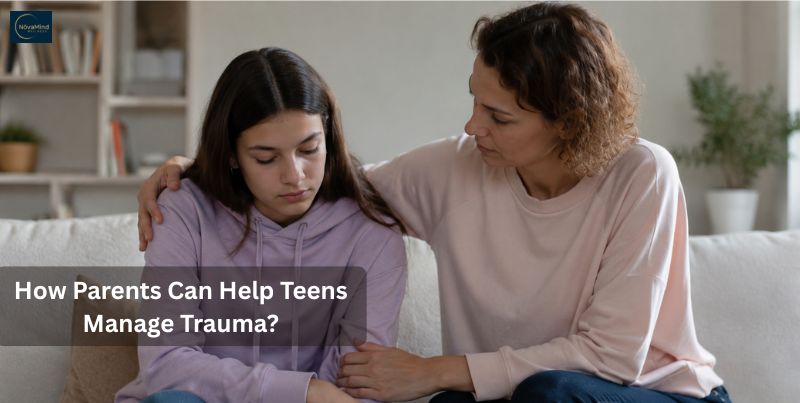
Objective: This blog is for parents who are watching their teenager struggle and do not know where to start. It covers what trauma looks like in teens, how it connects to conditions like bipolar disorder and borderline personality disorder, and what parents can actually do, at home and beyond.
Key Takeaways
- Trauma in teenagers often looks like anger, numbness, or risk-taking, not sadness.
- Unresolved trauma can overlap with bipolar disorder and borderline personality disorder, which is why professional evaluation matters.
- The signs of bipolar disorder in teens include extended mood episodes, sleep changes, and behaviors that disrupt daily life, beyond normal teenage moodiness.
- Parents help most by listening without jumping to solutions and by keeping routines stable.
- Mental health awareness at home, talking openly and normalizing therapy, changes how teens respond to getting help.
- If your teen talks about hurting themselves, seems disconnected from reality, or withdraws for a long time, seek professional help right away. These signs should be taken seriously.
Table of Contents
- What Trauma Actually Does to a Teenager
- How Trauma Shows Up, And Why It Gets Misread
- The Link Between Trauma, Bipolar Disorder, and Borderline Personality Disorder
- Signs of Bipolar Disorder in Teens Parents Often Miss
- What Parents Can Do at Home
- When to Get Professional Help
- Why Mental Health Awareness at Home Matters
- Key Takeaways
- FAQs
Introduction
Most parents know when something is wrong with their teenager. The hard part is knowing what to do about it.
Trauma does not always look like grief. In teenagers, it often looks like anger, silence, reckless behavior, or shutting everyone out. Parents mistake it for attitude. Teachers write it off as laziness. Meanwhile, the teen feels completely alone in what they are carrying.
Nova Mind Wellness works with families facing this kind of confusion and fear. Many parents want to help, but they do not know where to begin. This blog gives you honest, practical information to start with.
1. What Trauma Actually Does to a Teenager?
The teenage brain is still under construction. The part responsible for managing emotions and making decisions, the prefrontal cortex, does not fully develop until the mid-twenties.
When trauma hits during this window, it does not just cause emotional pain. It disrupts how the brain handles stress, relationships, memory, and even basic safety signals.
Trauma in teens can come from:
- Physical, emotional, or sexual abuse
- Neglect at home
- Losing a parent or someone close
- Bullying, in person or online
- Witnessing violence
- A serious accident or illness
A single event can leave a lasting mark. Repeated trauma, what clinicians call complex trauma, tends to go deeper and take longer to heal.
2. How Trauma Shows Up, And Why It Gets Misread?
Here is what most parents are not told: traumatized teenagers rarely look like what you imagine.
They do not always cry. They do not always ask for help. What they often do instead:
- Blow up over small things
- Pull away from everyone they love
- Stop caring about school, hobbies, or anything they used to enjoy
- Sleep too much or barely sleep at all
- Take risks they never would have before, substances, unsafe situations
- Complain about headaches or stomach pain with no clear medical cause
- Go completely flat, no emotion, no reaction, nothing
These behaviors are labeled “teenage drama” or “defiance.” That misread is costly. When a teen acts out from trauma and gets punished for it, they learn that showing pain leads to more problems. So they stop showing it.
3. The Link Between Trauma, Bipolar Disorder, and Borderline Personality Disorder
Trauma can affect how a teenager thinks, reacts, and manages emotions. It can also make some mental health symptoms harder to understand. This is why parents should be careful about guessing what is happening too quickly.
Some trauma responses can look similar to other conditions. A teen may have strong mood changes, sudden anger, impulsive choices, sleep problems, or intense fear of being left alone. These signs can sometimes overlap with bipolar disorder or borderline personality disorder traits.
But trauma does not automatically mean a teen has either condition.
Bipolar disorder is usually linked to clear mood episodes. A teen may go through periods of unusually high energy, less need for sleep, racing thoughts, or risky behavior. They may also go through low periods where they feel deeply tired, withdrawn, or unable to enjoy normal life. These changes are usually more intense than regular teenage mood swings.
Borderline personality disorder is different. Some teens may show traits linked to it, such as very intense emotions, fear of rejection, unstable relationships, or quick emotional shifts. Many clinicians are careful about diagnosing it before adulthood, but these traits still deserve support and care.
Trauma can add stress to both situations. It can make emotions feel stronger and harder to control. It can also affect trust, safety, and relationships. But only a qualified mental health professional can tell the difference between trauma symptoms, mood-related concerns, and personality-related patterns.
Parents do not need to diagnose their teen at home. Their role is to notice patterns, stay calm, offer support, and seek professional guidance when symptoms affect daily life.
A proper evaluation can help answer important questions, such as:
- Is this a trauma response?
- Is there a mood disorder involved?
- Are there emotional regulation concerns?
- Does the teen need therapy, medication, or both?
- What type of support will help the most?
The goal is not to label a teenager. The goal is to understand what they are facing and help them get the right care as early as possible.
4. Signs of Bipolar Disorder in Teens Parents Often Miss
Part of mental health awareness is knowing what to look for, not to put a label on your child, but to know when to act.
The signs of bipolar disorder in teenagers are different from how they appear in adults. Teen mania often looks like extreme irritability rather than euphoria. These signs do not confirm a diagnosis. They are reasons to speak with a mental health professional, especially when they last for days, affect sleep, or disrupt daily life.
| During a High Phase | During a Low Phase |
| Barely sleeping but full of energy | Sleeping 12+ hours, impossible to wake |
| Talking fast, thoughts jumping around | Going quiet, one-word answers |
| Reckless spending or decision-making | Feeling worthless or hopeless |
| Inflated confidence, grandiose ideas | No interest in anything |
| Short fuse, explosive anger | Crying without knowing why |
| Impulsive or dangerous behavior | Talking about death or disappearing |
The difference between normal teen moodiness and signs of bipolar disorder comes down to severity and duration. Typical mood swings are often tied to events. Bipolar episodes may last for days or weeks and can disrupt sleep, school, and relationships.
If you are seeing patterns like this, bring it to a psychiatrist who works with adolescents.

5. What Parents Can Do at Home
You do not need professional training to help your teenager. You need consistency and honesty.
Stop talking, start listening. When your teen does open up, your first move should not be advice. Ask questions. Let them finish. Teens shut down quickly when they feel lectured to. The goal of the first conversation is to keep the conversation going.
Regulate yourself before engaging. If your teenager is escalating, matching their energy makes things worse. Slow your voice down. Keep your tone steady. You are modeling something, showing them what calm looks like under pressure.
Hold the routine even when they resist. Trauma breaks a teen’s sense of safety. Predictable structure, regular meals, consistent bedtime, weekly check-ins, rebuilds it slowly. They will push against it. Keep it anyway.
Use side-by-side time. Many teenagers will not sit across from you and talk about their feelings. But they will talk during a drive, a walk, or while cooking. Create those low-pressure moments regularly.
Name what happened. Avoiding the subject does not protect your teenager. It teaches them that the trauma is too big to talk about. You do not need a script. “I know something really hard happened. I’m not going anywhere” is enough to start.
6. When to Get Professional Help
Some things go beyond what a parent can manage alone. Seek professional support if you notice:
- Any mention of self-harm or suicide, even as a passing comment
- Refusing to go to school for weeks on end
- Substance use that is becoming more frequent or hidden
- Eating has changed drastically
- Complete withdrawal from all social contact for several weeks
- Behavior that suggests they are not in touch with reality
Trauma-Focused Cognitive Behavioral Therapy, often called TF-CBT, is one evidence-supported option for teens with trauma-related symptoms. EMDR may also help some teens. The right approach depends on the teen’s history, symptoms, safety needs, and comfort level.
7. Why Mental Health Awareness at Home Matters
Teenagers absorb the attitudes of the adults around them. If mental health is treated as embarrassing or shameful at home, your teen will carry that silence right into the therapist’s waiting room, and possibly never make it there.
Mental health awareness in daily family life looks like:
- Talking about feelings without making it dramatic
- Treating therapy as normal, not a last resort
- Not using mental health terms as insults (“stop acting bipolar,” “that’s so crazy”)
- Sharing how you handle your own stress, age-appropriately and honestly
- Checking in regularly, not just when things fall apart
When parents understand what their teenager may be facing, they can respond with more patience, structure, and care. Parents are not on the sidelines of this process. They are in the middle of it.
Help Your Teen Feel Safe After Emotional Trauma
A supportive parent can help teens process difficult emotions more comfortably. Discover how calm communication and emotional reassurance can support healing and reduce emotional stress.
Start With A Free ConsultationConclusion
Teen trauma can be hard to understand, especially when it shows up as anger, silence, mood changes, or withdrawal. Parents do not need to have every answer. What matters most is staying calm, listening carefully, keeping routines steady, and knowing when professional help is needed.
With the right support, teens can begin to feel safer, understood, and less alone.
If your teen is struggling after trauma or emotional distress, reach out to Nova Mind Wellness for guidance and professional care that supports both teens and families.
FAQs
Q1: My teenager refuses to talk. Should I keep pushing?
No. Pushing a traumatized teen to talk before they are ready often backfires. Stay present, keep the door open, and let them lead. Most teens eventually open up when they feel safe, not pressured.
Q2: How do I know if mood swings are normal or a sign of something more serious?
Normal teen mood swings connect to specific situations. Signs of bipolar disorder involve episodes that cycle on their own, last for days or weeks, and disrupt sleep, school, and daily functioning, without a clear trigger.
Q3: Can borderline personality disorder be diagnosed in teenagers?
Many clinicians are cautious about diagnosing borderline personality disorder before age 18. But teens can absolutely show traits of it, especially after trauma, and those traits respond well to treatments like Dialectical Behavior Therapy (DBT).
Q4: My teen was diagnosed with bipolar disorder. Did their trauma cause it?
Trauma can trigger a first episode in someone who already has a genetic vulnerability to bipolar disorder. But bipolar disorder has a strong biological component. Many people with it have no significant trauma history. The relationship varies from person to person.
Q5: Is therapy alone enough, or does my teen need medication?
It depends. Trauma without a co-occurring condition is often treated well with therapy alone. Bipolar disorder typically requires medication alongside therapy. A psychiatrist who specializes in adolescents is the right person to make that call with you.
Q6: How do I bring up therapy without making my teen feel broken?
Normalize it before you need it. Talk about therapy the way you talk about any other kind of healthcare. When you do raise it directly, be honest and specific: “You’re going through something hard. I want to make sure you have the right support.”